Operating costs
Turboprop operating costs by model
What a turboprop costs per hour and per year, from owner-flown singles to King Airs and utility workhorses.
4 models · median $2,590 a flight hour at 200 hours a year · CRAFT estimates
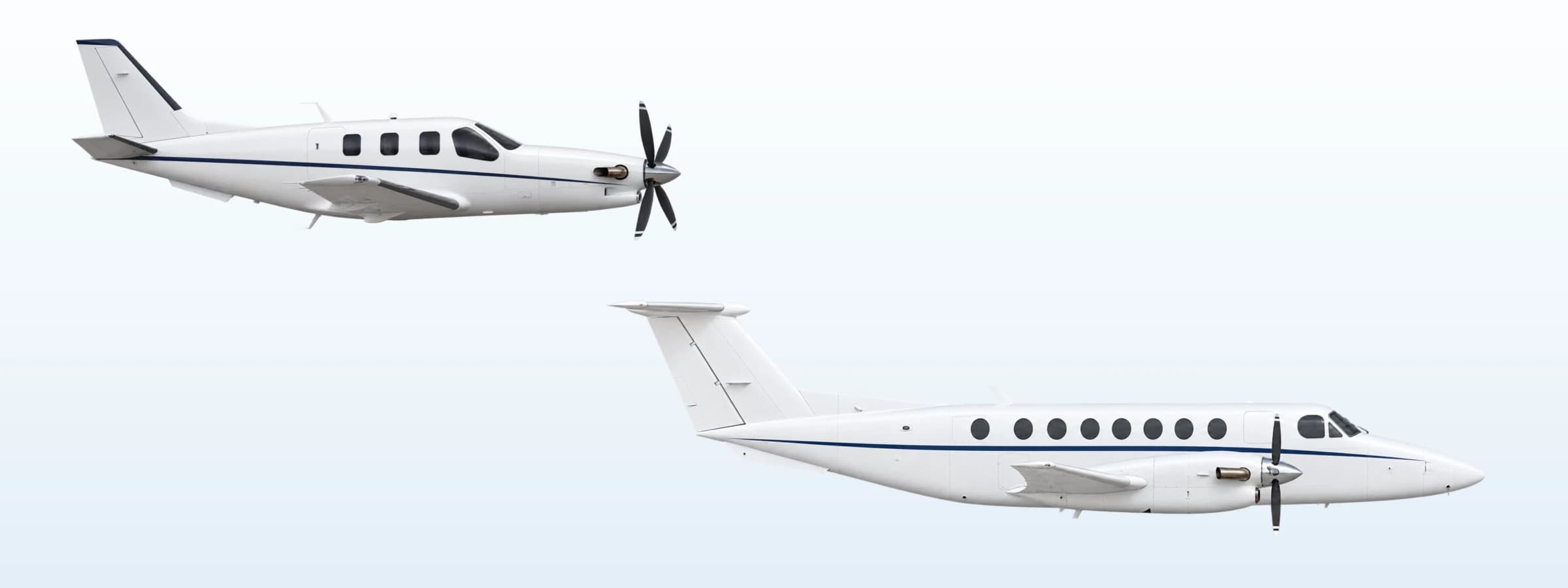
Turboprops
What sets the cost of turboprops
- Turbine engines cost more to overhaul than pistons, so the engine reserve per hour is several times larger.
- Single-engine turboprops like the TBM and M-series are often owner-flown; twins and utility types are costed with a paid pilot.
- Jet A is cheaper per gallon than 100LL at most airports, but a turboprop burns far more of it.
| Class | Models | Median per hour |
|---|---|---|
| Single-engine turbopropOwner-flown | 1 | $1,240 |
| Utility turboprop1 pilot | 1 | $2,270 |
| Turboprop (business)1 pilot | 2 | $3,220 |
Calculator
Turboprops cost calculator
Turboprops operating cost calculator
$247,754 per year
$67,830 fixed + $900/hr × 200 hrs ($437/hr of it fuel: 57 gal at $7.66). About $1,239 per flight hour with the fixed costs spread over the hours. Daher TBM 960, CRAFT estimate.
Every model
Operating cost of every turboprop we estimate
4 aircraft. Costs at 200 hours a year, CRAFT estimates.
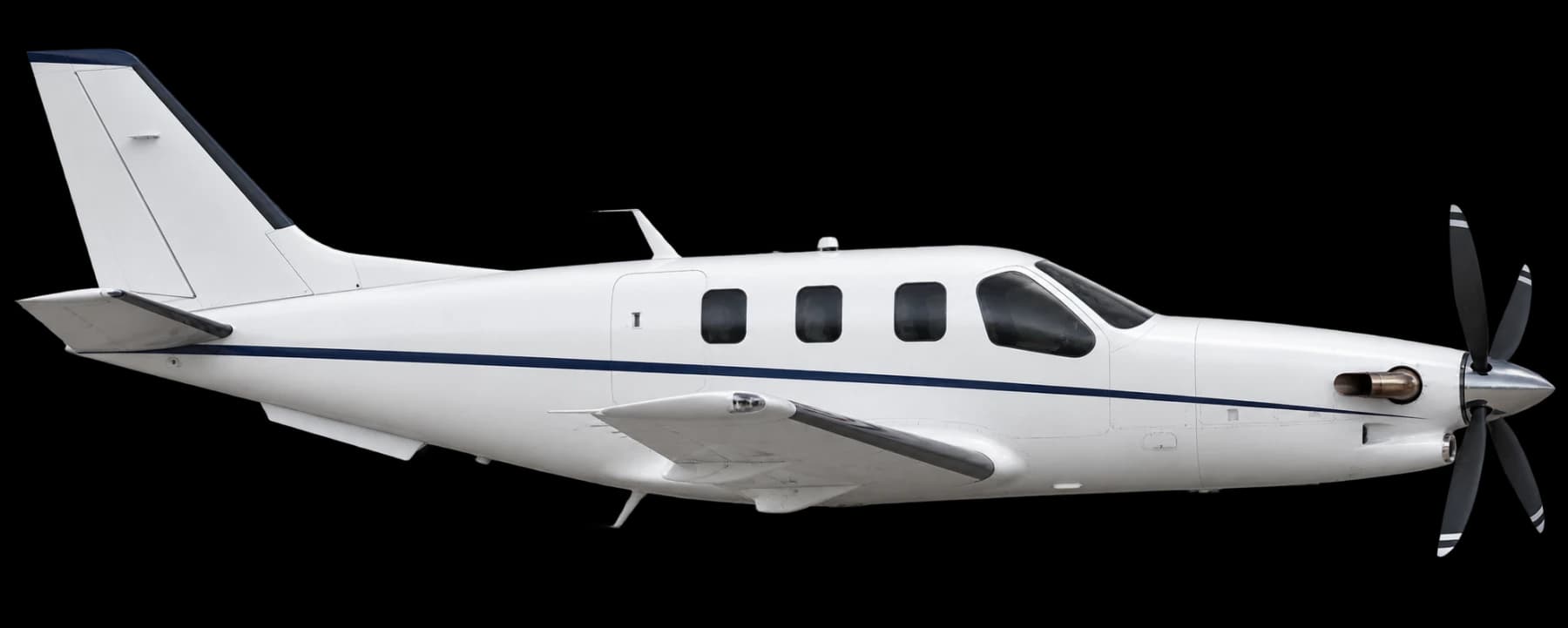 Daher TBM 960Owner-flown | Single-engine turboprop | $1,239 | $247,830 | 57 gal/hrJet A | 5 |
|---|---|---|---|---|---|
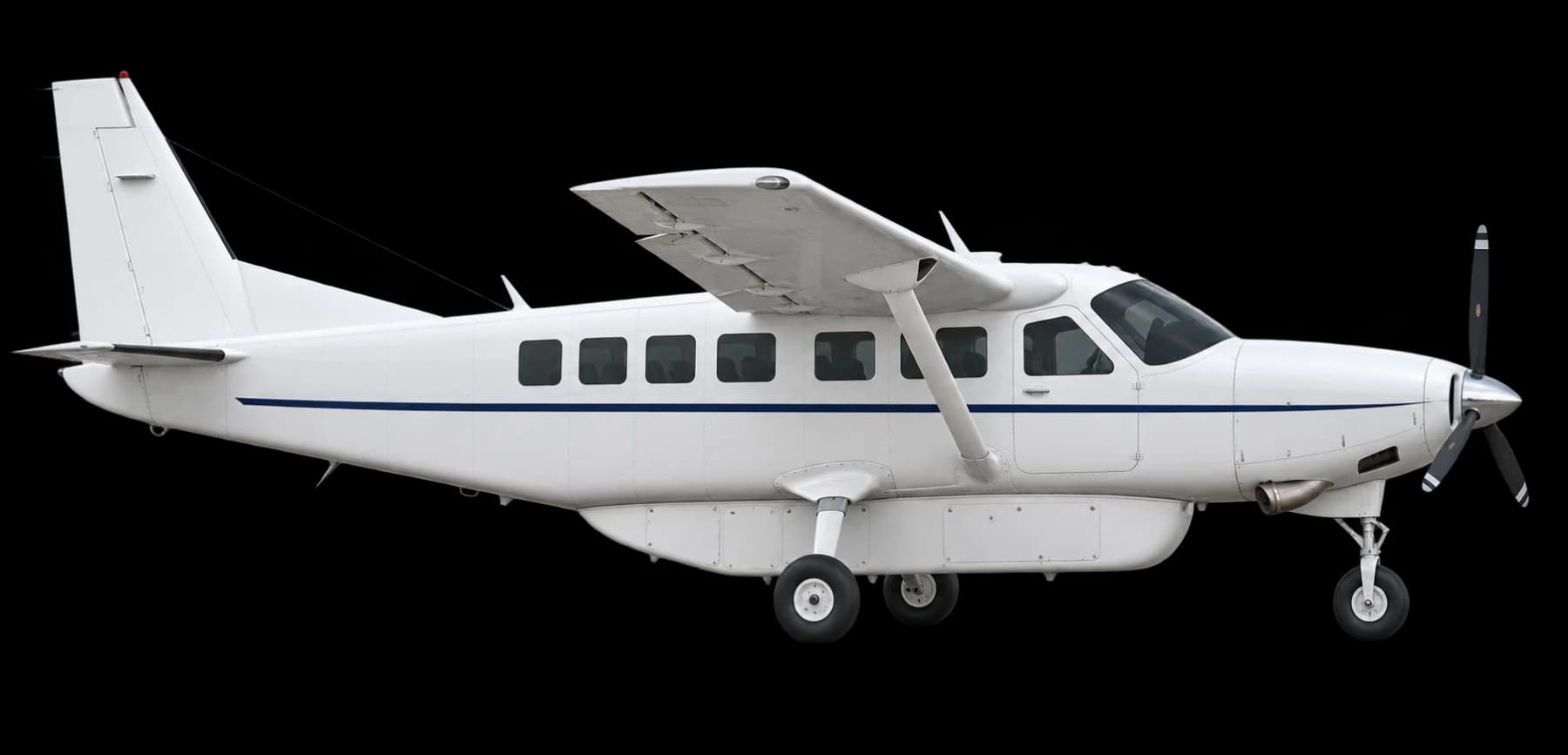 Cessna 208 Caravan1 pilot | Utility turboprop | $2,272 | $454,311 | 55.3 gal/hrJet A | 9 |
Pilatus PC-12 NGX1 pilot | Turboprop | $2,911 | $582,259 | 69 gal/hrJet A | 10 |
Beechcraft King Air 3601 pilot | Turboprop | $3,519 | $703,746 | 136 gal/hrJet A | 9 |
27 aircraft we cover but don't estimate yet, and why
- Beechcraft King Air 260: No fuel burn we can cite: the manufacturer publishes no average and Conklin & de Decker's published averages don't list it.
- Beechcraft King Air 350: The only fuel burn we found is an encyclopedia figure, with no maker's or government document behind it that we could check.
- Beechcraft King Air B100: The only fuel burn we found is an encyclopedia figure, with no maker's or government document behind it that we could check.
- Beechcraft King Air 200: No published fuel burn we could cite: the maker's documents we could reach don't state one and no government rate schedule lists it.
- Beechcraft King Air C90: No published fuel burn we could cite: the maker's documents we could reach don't state one and no government rate schedule lists it.
- Beechcraft King Air F90: No published fuel burn we could cite: the maker's documents we could reach don't state one and no government rate schedule lists it.
- Cessna Caravan 208B Blackhawk XP42: No published fuel burn we could cite: the maker's documents we could reach don't state one and no government rate schedule lists it.
- Cessna 425 Conquest I: No published fuel burn we could cite: the maker's documents we could reach don't state one and no government rate schedule lists it.
- Daher Kodiak 100: No published fuel burn we could cite: the maker's documents we could reach don't state one and no government rate schedule lists it.
- Socata TBM 700: No published fuel burn we could cite: the maker's documents we could reach don't state one and no government rate schedule lists it.
- Socata TBM 850: The only fuel burn we found is an encyclopedia figure, with no maker's or government document behind it that we could check.
- Daher TBM 900 series: The only fuel burn we found is an encyclopedia figure, with no maker's or government document behind it that we could check.
- DHC-2 Turbine Beaver: No published fuel burn we could cite: the maker's documents we could reach don't state one and no government rate schedule lists it.
- DHC-3 Turbine Otter: No published fuel burn we could cite: the maker's documents we could reach don't state one and no government rate schedule lists it.
- De Havilland Canada DHC-6 Twin Otter: The only fuel burn we found is an encyclopedia figure, with no maker's or government document behind it that we could check.
- Epic E1000: The only fuel burn we found is an encyclopedia figure, with no maker's or government document behind it that we could check.
- Fairchild Swearingen Merlin III: No published fuel burn we could cite: the maker's documents we could reach don't state one and no government rate schedule lists it.
- Mitsubishi MU-2 Solitaire: No published fuel burn we could cite: the maker's documents we could reach don't state one and no government rate schedule lists it.
- Piaggio P.180 Avanti: No published fuel burn we could cite: the maker's documents we could reach don't state one and no government rate schedule lists it.
- Pilatus PC-12 NG: The only fuel burn we found is an encyclopedia figure, with no maker's or government document behind it that we could check.
- Pilatus PC-6 Turbo Porter: No published fuel burn we could cite: the maker's documents we could reach don't state one and no government rate schedule lists it.
- Piper PA-42 Cheyenne: No published fuel burn we could cite: the maker's documents we could reach don't state one and no government rate schedule lists it.
- Piper M500: The only fuel burn we found is an encyclopedia figure, with no maker's or government document behind it that we could check.
- Piper M600: No published fuel burn we could cite: the maker's documents we could reach don't state one and no government rate schedule lists it.
- Piper M700 Fury: No published fuel burn we could cite: the maker's documents we could reach don't state one and no government rate schedule lists it.
- Piper PA-46-500TP Meridian: No published fuel burn we could cite: the maker's documents we could reach don't state one and no government rate schedule lists it.
- Twin Commander 690: No published fuel burn we could cite: the maker's documents we could reach don't state one and no government rate schedule lists it.
Other types: helicopter operating costs, piston aircraft operating costs, private jet operating costs, regional airliner operating costs, or every aircraft.
Method
How every estimate is built
The same formula for every aircraft: fixed costs a year (crew, training, hangar, insurance, management, inspections) plus a cost per flight hour (fuel, maintenance, engine and parts reserves, fees). Annual cost is fixed costs plus the hourly cost times the hours flown; the hourly figure we quote spreads the fixed costs over 200 hours.
- Fuel: each model's published fuel burn, times one price for every aircraft that burns that fuel: Jet A at $7.66 a gallon and 100LL avgas at $7.41, the U.S. average FBO prices in our fuel price data. A model without a published fuel burn gets no estimate.
- Crew: U.S. Bureau of Labor Statistics pay plus employer benefits. Piston airplanes, piston helicopters and the owner-flown turboprop singles assume the owner flies: the crew line is $0 and every page has a switch to add a hired pilot.
- Hangar and insurance: published airport hangar schedules, and an aviation insurance broker's published premiums and hull rates, applied to each model's published price where there is one.
- Maintenance and reserves: engine reserves from the maker's time between overhauls and a published overhaul price where one exists; otherwise, and for maintenance, a stated range for the class, midpoint used and shown on every page.
- Not included: the purchase price, financing, depreciation, taxes, upgrades, and any rental or charter income.
Sources
- BLS Occupational Employment and Wage Statistics, May 2025 (released May 15, 2026)
- BLS Employer Costs for Employee Compensation, June 2026 (released September 9, 2026)
- Published airport hangar and tie-down rates (Concord-Padgett Regional, City of Concord NC; Naples Airport Authority FY2026) (read October 15, 2026)
- Published airport hangar rates (Concord-Padgett Regional, City of Concord NC; Naples Airport Authority FY2026; Pierce County WA; Smith Reynolds, Forsyth County NC) (read October 5, 2026)
- BWI Aviation Insurance, "How much is aircraft insurance? A complete 2026 cost breakdown" (January 4, 2026)
- BWI Aviation Insurance, "Helicopter insurance cost" (January 28, 2020)
- Robinson Helicopter Company, Estimated Operating Cost sheets for the R22, R44 Raven II and R66, 2026
- USDA Forest Service, Helicopter Services Hourly Flight Rates, Fuel Consumption, and Weight Reduction Chart (contracts awarded 2013 to 2017, effective February 16, 2019)
- CRAFT jet fuel price data
- CRAFT fuel price data: AirNav Fuel Price Report, national 100LL average
- FAA task orders for recurrent pilot training with FlightSafety International (USAspending.gov) (orders 2024 to 2026)
- Pilatus CrystalCare example calculations (2026 brochures)
- Fuel burn: the maker's published figure (flight manual, spec sheet or operating-cost sheet) or the USDA Forest Service's helicopter fuel consumption chart; engine overhaul intervals from Lycoming, Continental and the airframe makers. Each is listed on the model's page.
We do not use other cost calculators' or brokers' published budgets. Spot something wrong? Tell us.
Frequently asked questions
How much does a turboprop cost per hour?
In our estimates at 200 hours a year, from $1,240 an hour (Daher TBM 960) to $3,520 (Beechcraft King Air 360), median $2,590. That counts the fixed costs spread over the hours as well as fuel, maintenance and reserves.
How much does a turboprop cost a year to own?
The median model costs about $518,000 a year flown 200 hours, before the purchase price, financing and depreciation. Single-engine turboprop: about $248,000; Utility turboprop: about $454,000; Turboprop (business): about $643,000.
Charter Sales
Tell us the trip. We'll tell you the number.
Route, dates, rough timing, how many people. That is enough to start, and you get a firm price for that specific trip rather than a range.
Text us and you'll get a reply within 60 seconds, any hour.