Basics
Private Jet Cockpit Technology: What You Need to Know
Discover the cutting-edge technology inside a private jet cockpit, from advanced avionics to digital displays.
 BenedictPrivate Aviation ConsultantUpdated December 12, 2024 · Published November 15, 2024 · 11 min read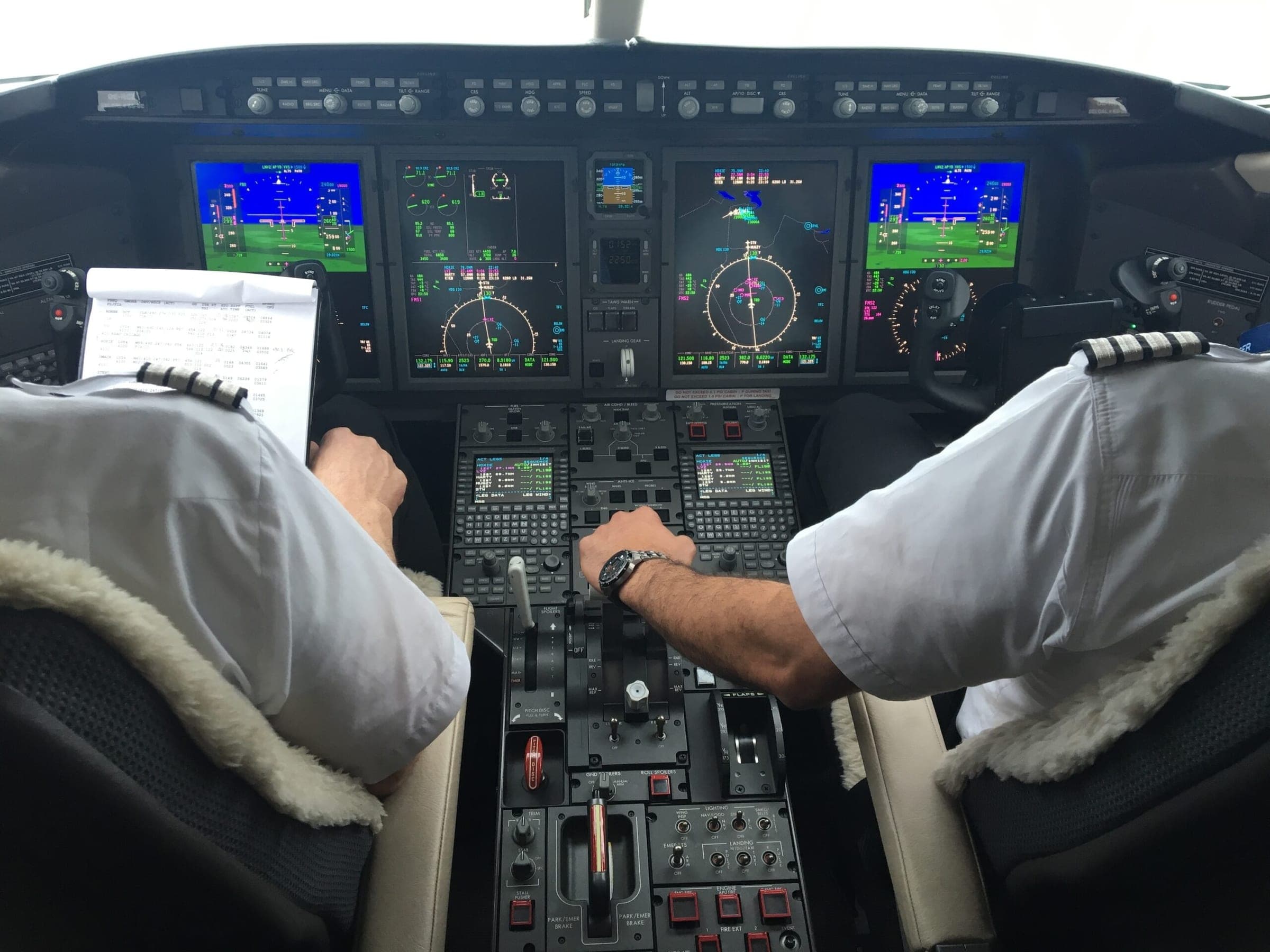
The modern private jet cockpit has changed a lot. It now uses digital displays and advanced avionics instead of old analog tools. The flight deck, where pilots work, is now filled with new technologies.
These technologies help pilots see their surroundings better. They also make it easier to communicate and change altitudes. Plus, they track the plane’s location more accurately.
While basic flying principles remain the same, private jet cockpits have added many new features. These include glass panels and Automatic Dependent Surveillance–Broadcast technology. They also have Controller Pilot Data Link Communication.
These advancements are changing how private jets are flown and navigated. They make flying safer and more efficient.
Key Takeaways:
- The integration of these technologies in private jet cockpits reflects the ongoing advancements in the aviation industry.
- Modern private jet cockpits have evolved significantly, incorporating advanced avionics and digital displays.
- Cutting-edge technologies like glass panel upgrades and Automatic Dependent Surveillance–Broadcast enhance aircraft tracking and communication capabilities.
- The flight deck, or cockpit, is the nerve center of an aircraft, housing pilots and instrument panels.
- Private jet cockpits now feature a range of innovative features that redefine the pilot’s experience and improve overall operational efficiency.
Evolution of Modern Cockpit Design
The shift from analog to digital cockpits was a big step in aviation. NASA helped create display devices that turned raw data into clear images. This led to the first glass cockpits in the 1980s, starting with the Airbus A310 and Boeing 757/767.
This change allowed big planes to be flown by just two pilots, making things more efficient. It also cut down on the number of crew members needed.
Over time, the cockpit has changed a lot. It went from the open designs of the Wright Brothers to today’s advanced, ergonomic layouts. The late 1970s saw the first digital “Glass Panel” instruments, replacing old analog gauges.
This change gave pilots a quick view of flight and engine data. It was a big leap forward.
Designs have also improved to make flying safer and more comfortable. Controls are now placed with ergonomics in mind, making flying easier. You can see this in the different control systems used today, like the side sticks in the Airbus A320.
New materials, like those in the Boeing “Dreamliner,” have also improved cockpits. They help planes perform better and more efficiently. As technology advances, we’ll see even more advanced glass panels and touchscreens in cockpits. These will make flying even safer and more intuitive for pilots.
Understanding Private Jet Cockpit Layout
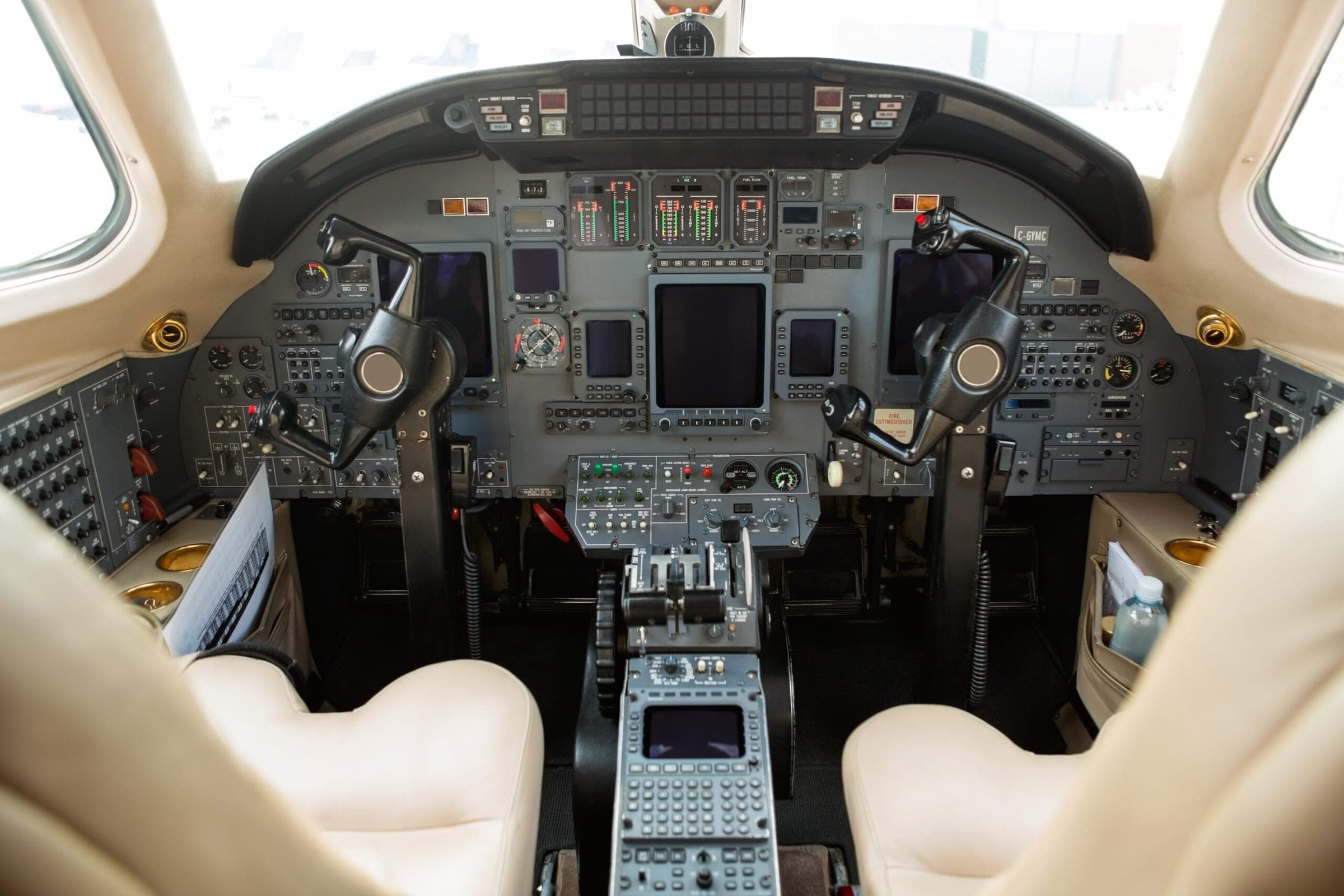
Private jet cockpits follow a standard layout for better control and management. The main part is the yoke or side stick. Pilots use it to control the aircraft’s movement.
The rudder pedals help with direction during takeoff and landing. They are key for safe flight.
The engine control quadrant is near the flight controls. It has the throttle, mixture, and propeller controls. These help pilots manage the engine’s power during flight.
The instrument panel shows important flight data like speed and altitude. It helps the crew keep an eye on the aircraft’s status.
Controls for communication, navigation, and systems are also in the cockpit. They are placed for easy access. This layout is crucial for safe and efficient flying.
Tyler Olson / Shutterstock.com
Essential Flight Instruments and Controls
In the private jet cockpit, the “six pack” is key. It gives pilots vital info on speed, attitude, altitude, and direction. The airspeed indicator, attitude indicator, altimeter, turn coordinator, heading indicator, and vertical speed indicator are all part of it.
The airspeed indicator shows the plane’s speed in knots or miles per hour. It has color-coded markings for important speeds like stall and never-exceed. The attitude indicator, powered by a gyroscope, shows the plane’s pitch and roll. It has a blue sky above and brown ground below.
The altimeter uses barometric pressure to show the plane’s altitude. The turn coordinator shows the rate of turn and roll. The heading indicator, also gyro-stabilized, shows the compass direction the plane is flying in. It has a 360-degree compass card.
Modern private jet cockpits also have many flight deck controls. These include the ignition system, flap handle, and switches for managing systems. Even with digital displays, the core info from these instruments is still vital for safe flying.
The Glass Cockpit Revolution
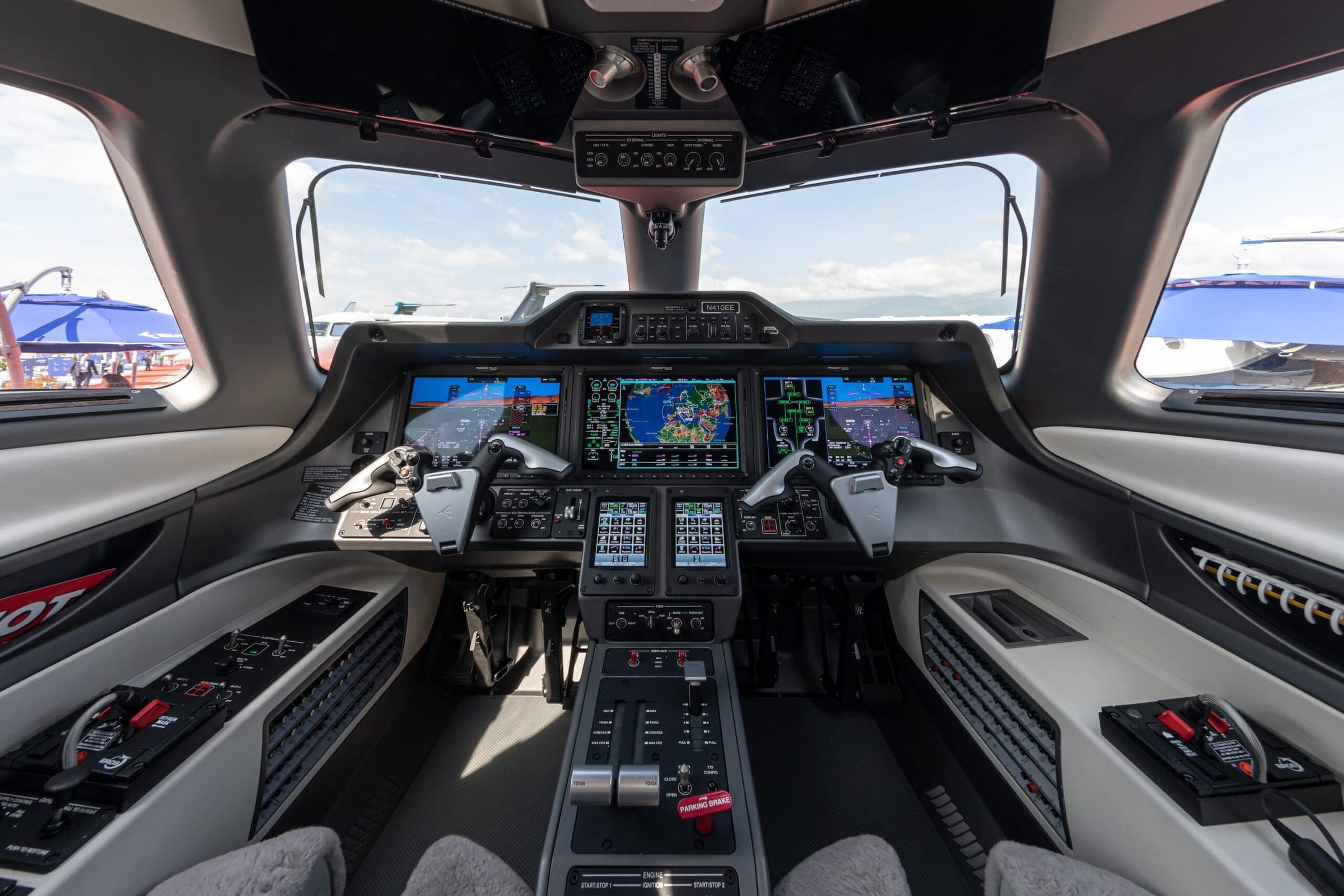
The modern private jet cockpit has changed a lot. It now uses digital displays instead of old analog gauges. This change has made flying safer and easier for pilots.
Glass cockpits combine many important pieces of information into clear digital screens. These screens show flight data, navigation, and system status. This makes it easier for pilots to understand the aircraft’s state and make quick decisions.
The glass cockpit has greatly improved private aviation. It has made flying more efficient and safer. As technology advances, the glass cockpit will continue to set new standards for luxury and safety in the skies.
Matti Blume, CC BY-SA 4.0, via Wikimedia Commons
Advanced Navigation Systems
Modern private jets have advanced navigation tech, changing how pilots plan and fly. At the top of these changes are GPS, inertial navigation, and flight management systems (FMS).
GPS gives pilots exact location data, helping them set precise routes and paths. Inertial navigation systems offer a reliable backup when GPS signals are lost. Together with digital maps and terrain databases, they improve pilots’ awareness, helping them make better decisions during flight.
The FMS is the aircraft’s main control, handling navigation, planning, and performance. This tech makes flying safer and more efficient, cutting down on pilot work and improving flight operations.
These advanced systems have changed private jet cockpits, giving pilots unmatched abilities. With GPS, inertial navigation, and FMS, private jet owners get better precision, safety, and efficiency in their flying.
Communication Technologies in Modern Cockpits
The modern private jet cockpit has seen big changes thanks to new communication tech. DataComm systems now send messages and files fast, cutting down on mistakes. Satellite-based communication systems let pilots stay in touch with air traffic control anywhere in the world.
New tech has changed how pilots work. Radio systems are now joined by digital links for quick info exchange. Tablets and iPads help with data, route changes, and weather updates, making planning easier.
Now, sharing data is cheaper and more widespread. This lets pilots do things like file flight plans and check fuel prices on the go. It saves time and avoids last-minute scrambles.
Systems like Gogo AVANCE L3 and L5 are made for pilots. They show how important it is to have the latest in-flight tech. This tech helps pilots stay connected, manage their work, and do admin tasks while flying, making their job safer and more efficient.
Weather Radar and Detection Systems
Private jets have advanced weather radar and detection systems. These tools give pilots real-time info on the atmosphere. They help pilots steer clear of bad weather, turbulence, and icing, making flights safer and more comfortable for everyone.
The newest weather radar systems use flat antennae and X-band frequencies. This is a big step up from the old C-band frequencies. It means pilots can spot weather patterns more accurately, thanks to how water and ice reflect radar signals.
These systems work with navigation displays to give pilots a full view of the air around them. This helps them decide the best way to avoid storms and smooth out bumpy flights. Features like predictive turbulence and wind shear detection help pilots stay ahead of changing weather.
But, weather radar isn’t perfect. Heavy rain or ice on the radome can make storms seem less intense. Pilots also have to wait up to 10 minutes for NEXRAD radar data. They must use their own judgment and experience to keep their planes safe.
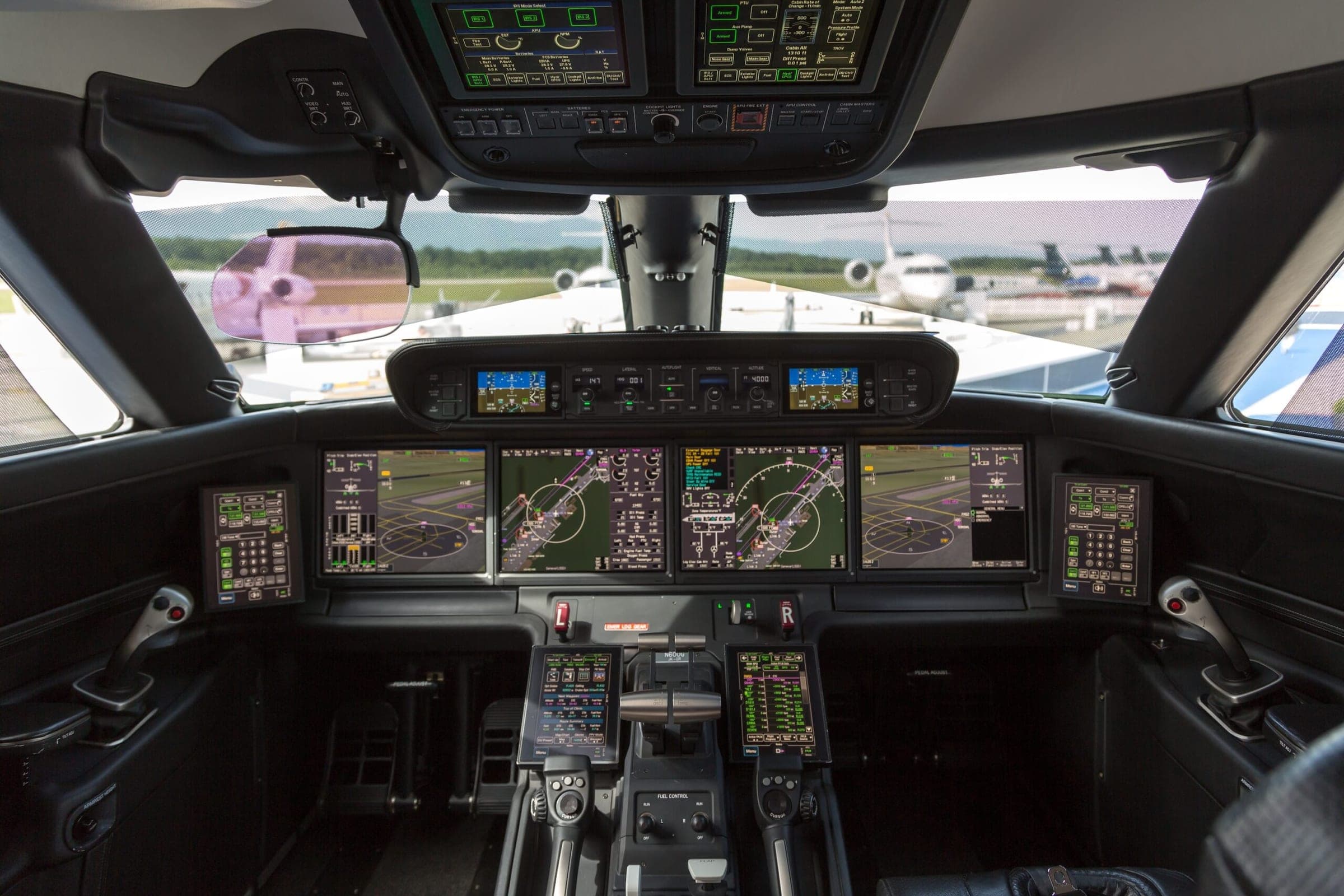
Matti Blume, CC BY-SA 4.0, via Wikimedia Commons
Autopilot and Flight Control Systems
Modern private jets have advanced automatic flight control systems. They manage flight from takeoff to landing with little pilot input. These systems, known as fly-by-wire, use electronic interfaces instead of mechanical controls. This makes flying more efficient and easier to handle.
Flight envelope protection is a key part of these systems. It stops pilots from flying too far from safe limits. This makes flying safer. Automated systems also make flying smoother and more precise, reducing pilot workload.
| Autopilot Issue | Potential Cause |
|---|---|
| Intermittent problems | Difficult to troubleshoot |
| Pilot misuse | Can impact system performance |
| Servo motor issues | Due to wear and age of components |
| Airframe flight control rigging | Can contribute to poor system performance |
| Wiring issues | Chafing or vibration leading to intermittent continuity problems |
| Software glitches | Can be critical and potentially fatal if not addressed |
The autopilot was invented by the Sperry Corporation in 1912, just nine years after the Wright Brothers’ flight. Early systems used gyros to sense movement and compare it to pilot inputs. Today, autopilot and automatic flight control systems (AFCS) use data from many systems to control the aircraft precisely.
Emergency and Safety Systems
Private jets have advanced emergency and safety systems. These systems help reduce risks and keep everyone safe during flight. They protect pilots, crew, and passengers in case of an emergency.
The Traffic Collision Avoidance System (TCAS) is a key feature. It watches the air around the plane and warns pilots of possible mid-air collisions. This system is crucial for keeping planes safe from each other.
In case of a sudden drop in air pressure, private jets have an Emergency Descent Mode. This mode helps the plane descend safely. There are also portable oxygen systems. They give oxygen that can flow through masks above seats.
Private jets also have advanced fire detection and suppression systems. Halon 1211 fire extinguishers quickly put out flames for 8-15 seconds. Water-based extinguishers use pressurized solutions to fight fires. Smoke hoods, or Protective Breathing Units (PBUs), keep crew members safe from smoke.
| Safety Feature | Description |
|---|---|
| Traffic Collision Avoidance System (TCAS) | Monitors airspace to alert pilots of potential mid-air collisions |
| Emergency Descent Mode | Initiates a controlled descent to a safer altitude during rapid decompression |
| Portable Oxygen Systems | Provide around 11 cubic feet of oxygen, flowing at 2-4 liters per minute |
| Fire Extinguishers | Halon 1211 and water-based solutions for quick-acting flame suppression |
| Protective Breathing Units (PBUs) | Safeguard crew members from smoke inhalation during an emergency |
Private jets’ emergency and safety systems are vital. They ensure a safe flight for everyone on board.
Private Jet Cockpit Automation Features
Automation is key in modern private jet cockpits. It boosts safety, efficiency, and pilot productivity. Features like automated checklists and system monitoring help pilots manage complex tasks and optimize flight settings.
Automated checklists make pre-flight and in-flight tasks smoother. They cut down on human mistakes and keep safety protocols consistent. System monitoring tools watch over aircraft systems, warning pilots of any issues early on.
Performance optimization algorithms analyze data in real-time. They suggest the best climb and descent paths, track fuel use, and aid in emergencies. These tools help pilots make better decisions, improving safety and efficiency.
The use of these automation technologies in private jet cockpits is a big step forward. It lets pilots focus on the most important parts of flying. As the aviation world keeps growing, we’ll see more use of automated checklists, system monitoring, and performance optimization. This will change how pilots fly their planes.
Digital Flight Management Tools
The modern private jet cockpit has changed a lot. It now uses digital tools instead of paper charts and manual calculations. These tools make flying easier and more flexible for pilots.
Electronic Flight Bags (EFBs) are key in the cockpit. They give pilots digital access to charts, manuals, and performance data. Performance calculators help find the best takeoff and landing times, making flights safer and more efficient. Route optimization software also helps find the best flight paths, considering weather, airspace, and fuel.
These digital tools have changed how pilots manage flights. They automate tasks and provide real-time data. This makes flying smoother and more intuitive. Pilots can now focus on the important parts of flying, knowing their aircraft is performing well.
The private aviation industry is always growing, and so is the use of these digital tools. Pilots and aircraft owners can expect even more advanced features in the future. These will make flying safer, more efficient, and better overall.
Crew Resource Management
Effective Crew Resource Management (CRM) is key in modern private jet flying. It improves crew coordination, task management, and decision-making processes in the cockpit. New cockpit designs help by offering shared screens, easy-to-use interfaces, and clear information.
Flight crew training stresses the need for good communication, leadership, and teamwork. This ensures the best use of both human and tech resources in the cockpit. Incidents like United Airlines Flight 173 and United Airlines Flight 232 have shown CRM’s value. They’ve led to better training, communication, and decision-making in aviation.
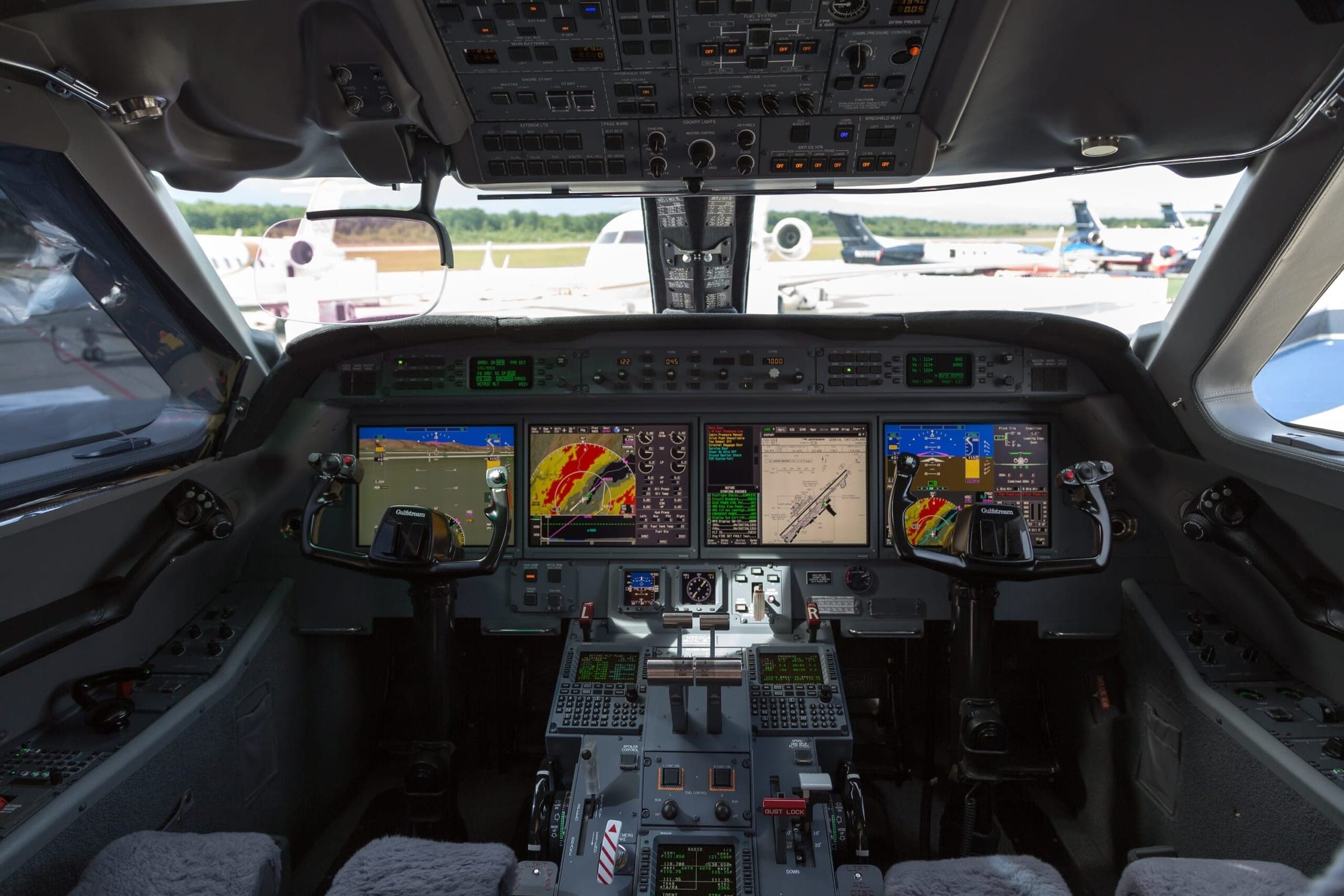
Matti Blume, CC BY-SA 4.0, via Wikimedia Commons
Future Technologies in Aviation
The world of private jet cockpits is on the verge of big changes. Artificial Intelligence (AI) systems are being made to help pilots make better decisions. This could lead to single-pilot operations in the future. Remote co-pilot tech could also let ground-based pilots take control in emergencies, making flying safer.
The industry is also looking into new vision systems for flying in bad weather. They want to add more automation and use unmanned aircraft systems in cockpits. With AI’s market expected to grow, these changes will change how private jets are flown and run.
3D printing, or additive manufacturing, is another big change. It’s expected to grow from $3.04 billion in 2023 to $7.37 billion by 2028. This tech makes making spare parts faster and supply chains more flexible, saving money and time in maintenance.
Virtual Reality (VR) is also being used in aviation. VR simulators and gear are used for training pilots in a real-like way. Big data analysis is being used to improve flying, from better passenger experiences to more efficient maintenance.
Companies like Airbus, Boeing, and Archer Aviation are leading in making autonomous aircraft. These changes, along with sustainable aviation fuels, are making flying private jets more green and high-tech.
Maintenance and Updates
Keeping modern private jets in top shape needs a strong maintenance plan and regular software updates. It’s key to keep avionics current with new air traffic systems and safety features. Advanced diagnostic tools help find and fix complex issues in the digital systems of private jet cockpits.
Private jet owners and operators must follow the FAA and aircraft makers’ maintenance schedules closely. This means doing regular checks, changing engine oil, and servicing parts as needed. Good maintenance keeps the aircraft running well and meets safety rules.
It’s also important to train maintenance staff as cockpit tech changes fast. Keeping up with software updates and new diagnostic tools is vital for safe flying. With regular maintenance and the latest upgrades, private jet owners can keep their aircraft’s systems in top condition.
Frequently asked questions
What are the key advancements in modern private jet cockpits?
Modern private jet cockpits have seen big changes. They now use advanced avionics and digital displays. Features like Controller Pilot Data Link Communication and Automatic Dependent Surveillance–Broadcast improve safety and efficiency.
How did the transition from analog to digital cockpits impact private aviation?
The switch to digital cockpits was a big step forward. It allowed for fewer pilots in the cockpit, making flying more efficient. This change came with the help of digital information and CRT displays in the 1980s.
What is the typical layout of a private jet cockpit?
Private jet cockpits have a standard layout. You’ll find the yoke or side stick, engine controls, and rudder pedals. The instrument panel shows important flight data, and controls for communication and navigation are easy to reach.
What are the essential flight instruments in a private jet cockpit?
The ‘six pack’ of flight instruments includes the airspeed indicator and altimeter. You’ll also find the attitude indicator, turn coordinator, heading indicator, and vertical speed indicator. These tools are key for safe flying.
How have glass cockpits revolutionized private jet instrumentation?
Glass cockpits have replaced old analog gauges with digital screens. This makes it easier to see important flight information. It also reduces pilot workload by showing data clearly on large LCD screens.
What advanced navigation systems are used in modern private jets?
Modern private jets use GPS and inertial navigation. They also have advanced flight management systems. These technologies help with precise navigation and efficient flight planning. Digital maps and terrain databases add to safety and decision-making.
How have communication technologies transformed private jet cockpit operations?
New communication technologies have changed how pilots talk to air traffic control. DataComm systems and satellite communication make communication fast and clear. This reduces the chance of mistakes and keeps pilots in touch globally.
What weather detection and avoidance systems are found in private jets?
Private jets have advanced weather radar and detection systems. These tools give pilots real-time weather info. They help pilots avoid bad weather and keep flights safe and comfortable.
How do autopilot and flight control systems improve private jet operations?
Modern autopilot and flight control systems make flying easier. They can handle all flight phases with little pilot input. This makes flying safer and more efficient.
What emergency and safety systems are incorporated in private jets?
Private jets have many safety systems. These include TCAS and Emergency Descent Mode for emergencies. They also have fire detection and suppression systems. These features work together to keep flights safe.
What automation features are found in private jet cockpits?
Private jet cockpits have automation for flight controls and more. They have automated checklists and system monitoring. These tools help pilots with complex tasks and keep the aircraft running smoothly.
How have digital flight management tools transformed private jet operations?
Digital tools have replaced paper charts in private jet cockpits. Electronic Flight Bags (EFBs) give pilots digital access to charts and manuals. This makes flying more efficient and flexible.
What is the importance of Cockpit Resource Management in private jet operations?
Cockpit Resource Management (CRM) is key for safe flying. CRM focuses on teamwork and decision-making. Modern cockpits support CRM with shared displays and clear information, making flying safer.
What emerging technologies are shaping the future of private jet cockpits?
New technologies like Artificial Intelligence (AI) will change private jet cockpits. AI will help pilots make decisions, and remote co-pilot technologies will be introduced. These advancements will make flying even safer and more efficient.
How do private jet operators maintain and upgrade their cockpit technologies?
Keeping private jet cockpits up-to-date involves regular software updates and system checks. Avionics upgrades are needed to stay current with air traffic systems. Maintenance uses advanced tools and training to handle complex systems.
Featured Image: Valeriya K / Shutterstock.com
Related
Related guides
Read next
The 10 Most Expensive New Private Jets
Everything you need to know about the most expensive private jets. From Gulfstream to Bombardier, here are the most expensive ways to fly.
October 5, 2026 · 8 min read
Here’s How Much it Costs to Fuel a Private Jet
Fuel is a necessary part of flying. It is also one of the largest variable costs. So, how much does it really cost to fuel a private jet?
October 5, 2026 · 7 min read
How Much Runway Do Private Jets Need to Take-Off?
A complete list of the minimum take-off distance of every private jet. Here's how much tarmac is required to get private jets in the air.
May 30, 2025 · 6 min read


Charter Sales
Tell us the trip. We'll tell you the number.
Route, dates, rough timing, how many people. That is enough to start, and you get a firm price for that specific trip rather than a range.
Text us and you'll get a reply within 60 seconds, any hour.