
Ownership Cost
Wheels Up Alternatives: The 5 Best Options in 2026 (Compared)
Wheels Up alternatives compared: Sentient Jet, the NetJets Card, Flexjet, VistaJet and the CRAFT Fleet Jet Card, with published terms and who each one fits.
 BenedictPrivate Aviation ConsultantUpdated October 4, 2026 · Published April 16, 2026 · 6 min read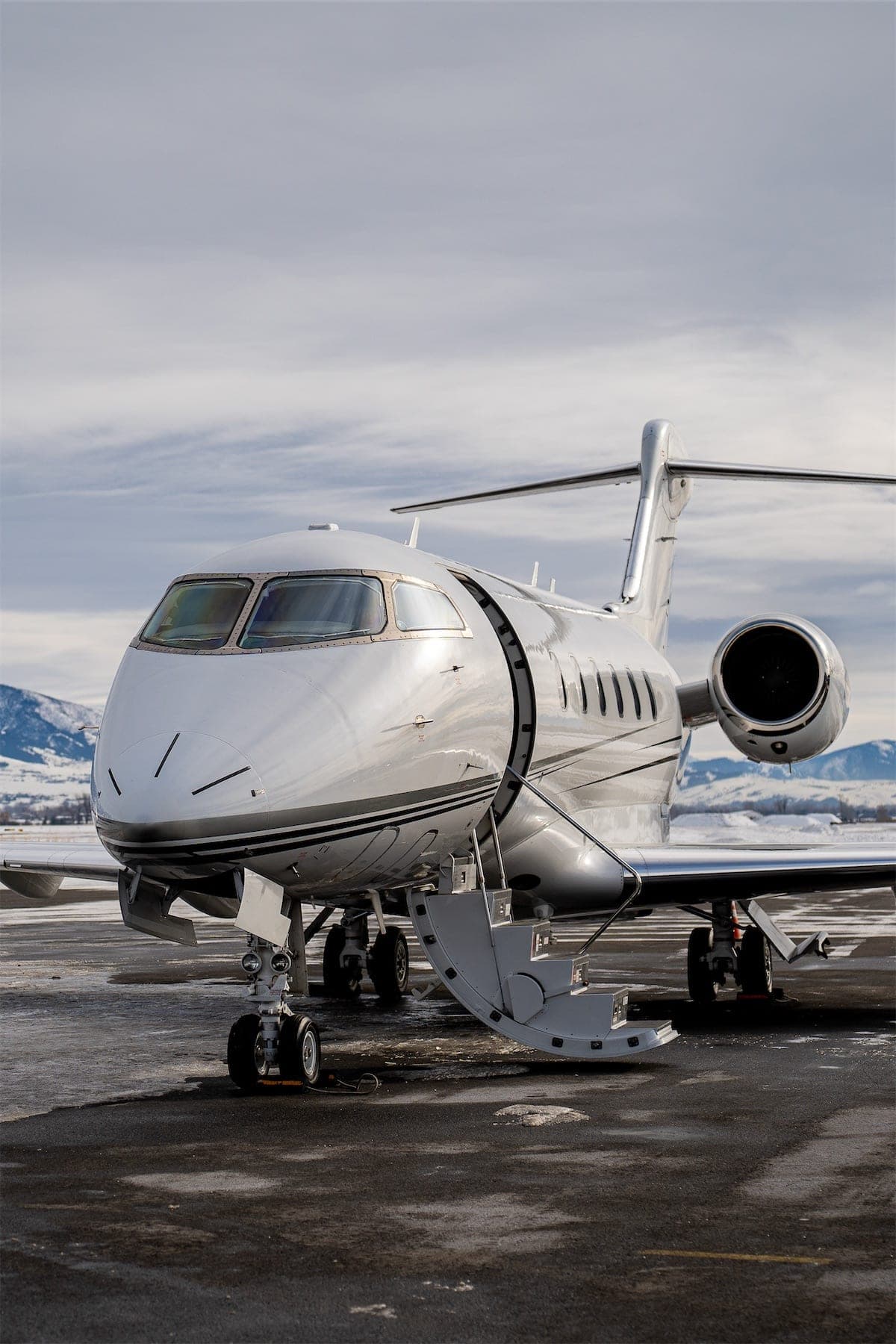
Wheels Up is one of the most accessible ways into private aviation, and it isn't the right fit for everyone. A monthly fee on top of per-flight rates, a fleet built around the Phenom 300 and Challenger 300 series, and no equity at the end leave room for alternatives if you fly more than about 25 hours, want a different aircraft, or prefer prepaid hours.
This guide covers five alternatives, what each publishes about its programs, and who each one fits.
| Program | Entry | Fleet | Commitment | Tends to fit |
|---|---|---|---|---|
| Wheels Up (baseline) | $200,000 minimum deposit plus a monthly fee | Phenom 300 and Challenger 300 series, plus partners | Membership term | Domestic, fixed or dynamic pricing |
| Sentient Jet | SJ25 light $183,100 for 25 hours, base | Operator network | Hours never expire | Pricing by cabin, no expiry |
| NetJets Card | $215,000 for 25 hours | Roughly 800 | Used within 24 months | Peak access, guaranteed aircraft |
| Flexjet 25 | Quote only | Roughly 300 | One-time 25-hour card | Trying a fractional fleet |
| VistaJet | VJ25: quote only | Several hundred | 3 years (VJ25) | International travel |
| CRAFT Fleet Jet Card (ours) | See the like-for-like table below | Five Challenger 300/350s | One block of hours | Super-midsize, East Coast and Florida |
Card and membership figures are as each company publishes on its own website, checked September 29, 2026. Fleet sizes are approximate, as publicly reported in early 2026; confirm current terms with each provider.
What is Wheels Up?
Wheels Up is a private aviation company with its own fleet and a marketplace of partner aircraft, partnered with Delta Air Lines. Since September 2025 its main program is Signature Membership: you fund a prepaid deposit and pay a monthly fee, then pay for each flight on a Fixed plan (one rate for every trip) or a Dynamic plan (priced by season, day of week and destination).
| Program | Signature Membership (operator + marketplace) |
|---|---|
| Cabins | Phenom 300 and Challenger 300 series; global charter through Air Partner |
| Entry price, as published | $200,000 minimum deposit + monthly fee |
| Minimum | $200,000 minimum prepaid deposit, plus a monthly fee |
| Callout | Not published |
| Peak days | Dynamic plan prices by season, day and destination; a fixed-rate plan is also offered |
| How you pay | $200,000 minimum prepaid deposit |
Rates: as published on its rate chart, checked September 29, 2026, fixed-plan rates at the minimum $200,000 fund are $9,295 an hour for the Phenom 300 and $13,495 an hour for the Challenger 300, and $8,695 and $12,695 at a $1,000,000 fund. The chart doesn't say whether tax or fuel is included.
Older tiers: earlier versions of this guide described Connect, Core and Business tiers with initiation fees of about $18,000 to $75,000 and annual dues of about $4,500 to $15,000, as publicly reported in early 2026. Those figures are approximate and may no longer apply; confirm current terms with Wheels Up, including which memberships it sells.
Delta: members get Delta Air Lines partnership benefits; ask which apply to your membership.
What to weigh: the monthly fee adds to the cost of every hour you fly; there is no equity at the end; and the guarantee covers the Phenom 300 and Challenger 300 series in the contiguous U.S. plus 225 miles.
The 5 best Wheels Up alternatives
Each program below differs from Wheels Up in at least one way that matters: no monthly fee, a deeper fleet, a different aircraft, or international reach. For how all private aviation models compare, see our complete guide.
1. Sentient Jet: pricing by cabin and hours that never expire
Sentient Jet sells 25-hour cards by cabin class with no membership fee, through a network of certified operators.
| Program | SJ25 / SJ25+ (broker (operator network)) |
|---|---|
| Cabins | Light (SJ25); Mid, Super-Mid, Large (SJ25+) |
| Entry price, as published | $183,100 for 25 hours (SJ25 light, base) |
| Minimum | 25-hour card; hours never expire |
| Callout | Not published on the card pages |
| Peak days | Not published |
| How you pay | 25-hour card price; fuel surcharge and FET added |
What it offers: as published on its website, checked September 29, 2026, 25-hour cards cost $183,100 (SJ25 light), $235,850 (SJ25+ mid), $288,225 (super-mid) and $341,000 (large), before the fuel surcharge and FET, and the hours never expire. Aircraft in those classes include the Citation M2, Falcon 2000 and Legacy 450. Full details in the best jet cards compared.
The trade-off: Sentient is a broker, so the operator and aircraft can change by trip; you don't get Wheels Up's Delta benefits; and you buy 25 hours at a time.
Consider Sentient Jet if: you fly 20 hours or more a year and prefer prepaid hours to a monthly fee.
2. NetJets Card: guaranteed aircraft on short notice
The main difference between NetJets and Wheels Up is fleet depth: NetJets runs roughly 800 aircraft, as publicly reported in early 2026.
| Program | NetJets Card (fractional operator) |
|---|---|
| Cabins | 5 jet types, light to long-range |
| Entry price, as published | $215,000 (275 days of access) |
| Minimum | 25 hours, prepaid 25 at a time; 24 months to use them |
| Callout | As little as 48 hours |
| Peak days | Up to 320 days of access a year (entry price is for 275 days) |
| How you pay | Prepaid hours; unused hours end at the contract end date |
What it offers: an entry card of $215,000 for 25 hours with 275 days of access a year, as NetJets publishes (checked September 29, 2026), guaranteed aircraft on as little as 48 hours' notice, and no membership fee.
The trade-off: a larger upfront purchase than a Wheels Up deposit for occasional flyers, hours that must be flown within 24 months, and no Delta benefit. For a full comparison see NetJets vs Wheels Up.
Consider NetJets if: you fly 25 hours or more a year and have struggled to get an aircraft on peak days.
3. Flexjet 25: trying a fractional fleet
Flexjet's 25-hour card is a one-time trial of its fractional fleet and its Red Label dedicated crews. See how it compares with ours in Flexjet vs CRAFT.
| Program | Flexjet 25 (fractional operator) |
|---|---|
| Cabins | Light (Phenom 300) to ultra-long-range (G700) |
| Entry price, as published | Quote only |
| Minimum | 25 hours; offered once per client as a trial of Flexjet |
| Callout | As little as 5 days |
| Peak days | Not published |
| How you pay | Debit-style prepaid card: hours × primary-aircraft rate + 7.5% FET, with an hourly fuel adjustment |
What it offers: a fleet from the Phenom 300 to the G700, catering included, and no membership fee, per Flexjet.
The trade-off: quote-only pricing with FET and a fuel adjustment added, five days' notice, and a smaller fleet than NetJets.
Consider Flexjet if: you fly 25 hours or more a year, care about crew consistency, and may want a fractional share later.
4. VistaJet: international travel
Wheels Up is built mainly for U.S. trips. VistaJet is built for travellers whose routes regularly cross oceans, with no positioning fees, per VistaJet.
| Program | VJ25 / Program (operator) |
|---|---|
| Cabins | Medium and large cabins, e.g. Challenger 350, Citation XLS, Global 7500 |
| Entry price, as published | Quote only |
| Minimum | VJ25: 25–49 hrs/yr (up to 20% roll over); Program: 50+ hrs/yr |
| Callout | As little as 24 hours, globally |
| Peak days | VJ25: all non-peak and most peak days; Program: every day of the year |
| How you pay | Fixed hourly rate; no positioning fees |
What it offers: guaranteed availability with as little as 24 hours' notice globally, and long-range aircraft such as the Global 7500.
The trade-off: quote-only rates (as publicly reported in early 2026, VJ25 cost about $250,000 or more a year), a three-year term, no light jets and no Delta benefit. It suits about 50 hours a year or more.
Consider VistaJet if: you travel internationally several times a year.
5. CRAFT Fleet Jet Card: a guaranteed Challenger (our card)
CRAFT operates the Fleet Jet Card; this section is ours. CRAFT is a Part 135 operator of five Challenger 300 and 350 aircraft, ARGUS Platinum Rated and listed on the Wyvern registry, and the card buys prepaid hours at published rates on a Challenger flown by CRAFT crews, with no membership fee. If a CRAFT Challenger is unavailable for a confirmed trip, we may arrange a comparable aircraft.
Wheels Up's Challenger 300 and CRAFT's Challengers are both super-midsize, so that is the fair comparison. Here they are on one basis, with fuel and the 7.5% FET:
Jet cards in the super-midsize class, per hour on one basis
CRAFT Fleet Jet Card(ours)
- As published
- $12,950/hr
- Fuel and FET included
- With fuel and FET
- $12,950/hr
- Published price; fuel and FET included
Wheels Up Signature Challenger 300
- As published
- $13,495/hr
- Fixed plan; tax and fuel not stated
- With fuel and FET
- $14,507/hrEst.
- Fuel not stated; none added; FET added at 7.5%; program doesn't state tax
| Card | As published | Per hour with fuel and FET |
|---|---|---|
| CRAFT Fleet Jet Card(ours) | $12,950/hrFuel and FET included | $12,950/hrPublished price; fuel and FET included |
| Wheels Up Signature Challenger 300 | $13,495/hrFixed plan; tax and fuel not stated | $14,507/hrEst.Fuel not stated; none added; FET added at 7.5%; program doesn't state tax |
The Wheels Up figure leaves out its monthly fee. To see both priced on real routes, open CRAFT vs Wheels Up by route.
Consider CRAFT if: you fly about 25 to 100 hours a year, want a super-midsize Challenger on every trip, and fly mainly on the East Coast, in Florida and to the Bahamas. If you own a jet, Leaseback puts it on our certificate. CRAFT is also the exclusive operator for the Glidepath Exchange Fund, whose members fly the CRAFT Challenger fleet. Investors contribute a concentrated stock position to the fund and diversify it without triggering a taxable event. Glidepath is offered by a separate company; CRAFT operates the flights. Read about Glidepath.
Which alternative fits you?
Sentient Jet, if you
- fly 20 hours or more a year and prefer prepaid hours to a monthly fee;
- want to buy by cabin class;
- want hours that never expire. Compare all top jet card programs.
NetJets, if you
- have struggled to get an aircraft on peak days;
- fly 30 hours or more a year and want a guaranteed aircraft on short notice. See NetJets vs Wheels Up.
Flexjet, if you
- care about crew consistency;
- want to try a fractional fleet before buying a share. Read Flexjet vs CRAFT.
VistaJet, if you
- fly internationally several times a year;
- want long-range aircraft and no positioning fees. See NetJets vs VistaJet.
CRAFT, if you
- want a Challenger 300 or 350 on every trip rather than a choice of aircraft;
- want published rates with fuel and FET included and no membership fee. See the Fleet Jet Card and Wheels Up vs CRAFT.
For more, see the jet card providers we track, including Wheels Up, our private jet ownership statistics, and the charter cost calculator. For a single trip, see private jet charter cost or charter a Challenger from the operator.
Frequently asked questions
Is Wheels Up worth it compared to charter?
For people who fly only a few trips a year, on-demand charter can cost less once a membership's monthly fee is counted. A membership makes more sense as your hours grow and you want fixed rates and guaranteed access. Compare a year of your likely trips both ways.
What happened to Wheels Up financially?
As publicly reported, Wheels Up went through a difficult period in 2022 and 2023, followed by a 2023 financing led by Delta Air Lines, which remains a partner. Wheels Up is a public company, so its current financial position is in its public filings; read them, and ask how your deposit is held, before you fund a membership.
How does Wheels Up compare to a jet card?
Wheels Up asks for a prepaid deposit and a monthly fee, then bills each flight at fixed or dynamic rates. A jet card is a block of prepaid hours, usually with no monthly fee. Which costs less depends on how many hours you fly and in which cabin; compare them in the same cabin class with fuel and tax, as our jet card comparison does.
What are Wheels Up's current rates?
As published on its rate chart, checked September 29, 2026, Signature Membership fixed-plan rates at the minimum $200,000 fund are $9,295 an hour for the Phenom 300 and $13,495 an hour for the Challenger 300, lower on bigger funds. The chart doesn't say whether tax or fuel is included.
Does CRAFT have a membership fee?
No. The CRAFT Fleet Jet Card has no membership fee: you prepay a block of 25, 50 or 100 hours at a published rate, fuel and FET included, on a Challenger 300 or 350 flown by CRAFT crews.
Related
Related guides
Aircraft in this guide
Read next
NetJets Alternatives: The 5 Best Options in 2026 (Compared)
NetJets alternatives and competitors compared: Flexjet, Wheels Up, VistaJet, jet cards such as Sentient, and the CRAFT Fleet Jet Card, on cost, fleet, commitment and fit.
October 4, 2026 · 7 min read
Flexjet Alternatives: The 5 Best Options in 2026 (Compared)
Flexjet alternatives compared: NetJets, VistaJet, Wheels Up, Sentient Jet and the CRAFT Fleet Jet Card, with published terms, approximate share costs and who each one fits.
October 4, 2026 · 7 min read
VistaJet Alternative: The 5 Best Options in 2026 (Compared)
VistaJet alternatives compared: NetJets, Flexjet, Sentient Jet, Wheels Up and the CRAFT Fleet Jet Card, with published terms and who each one fits if you fly mostly at home.
October 4, 2026 · 6 min read


Charter Sales
Tell us the trip. We'll tell you the number.
Route, dates, rough timing, how many people. That is enough to start, and you get a firm price for that specific trip rather than a range.
Text us and you'll get a reply within 60 seconds, any hour.