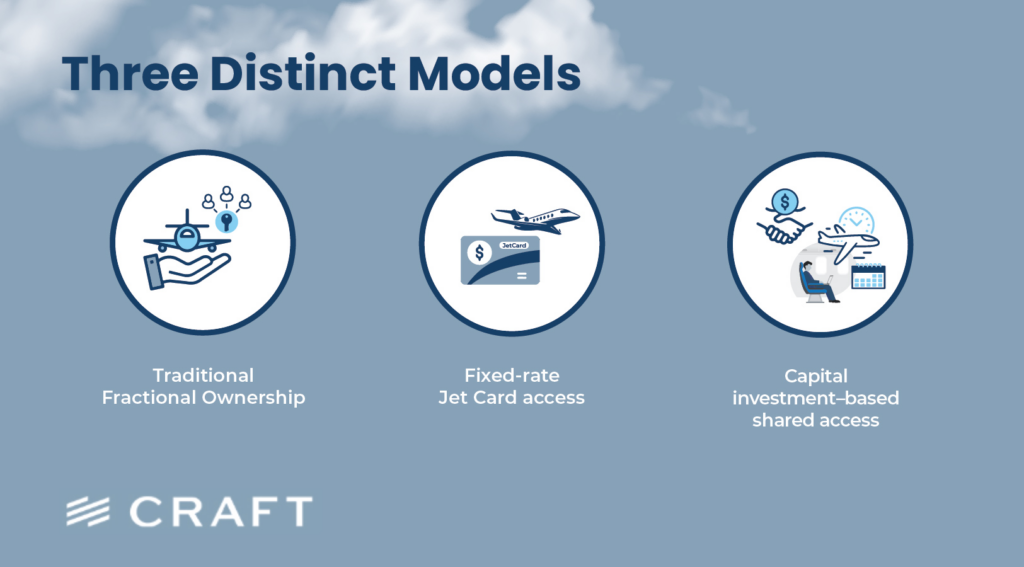
Between FlexJet and Craft, both private aviation services, there are actually three distinct models of transportation.
These include:
- Traditional fractional ownership
- Fixed-rate jet card access
- Capital investment–based shared access
This presents a nuanced question to luxury travelers who want an ideal combination of access, comfort, and convenience.
Do you want ownership, prepaid access, or investment-based shared flying? None of these options are objectively better than the other. It depends on how you travel.
In this article, we take a comprehensive look at FlexJet and Craft, comparing their various services and styles of operation to find out which option is best for your needs.
FlexJet Overview
FlexJet is a legacy private aviation operator. Their primary focus is on fractional ownership models.
They have a large fleet and a global operational framework that makes it easy to get almost anywhere on the planet with short notice. Because FlexJet owns and manages its own fleet, it is different from charter brokers.
FlexJet Fractional Ownership Programs
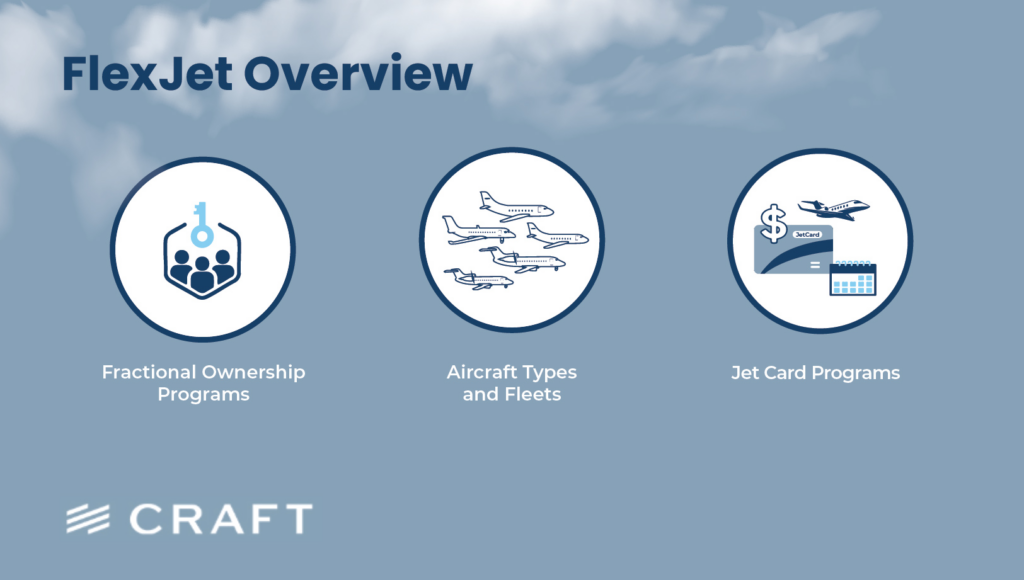
Through the FlexJet Fractional Ownership Program, you purchase a share of a specific aircraft. The most common entry-level share is a 1/16 purchase, which gives you access to 50 flight hours per year.
The larger your share, the more flight time you have. A 1/8 share, for example, buys you 100 occupied hours.
The ownership term framework is five years, after which point you can renew your membership or sell your share of the plane minus depreciation.
It’s important to understand that even though there are many operational aspects of fractional ownership that are quite similar to a jet card arrangement, this is true ownership. You are buying a literal share of an actual aircraft.
That said, the plane that you buy into is not necessarily, or even probably, the plane that you will wind up using. FlexJet, like most fractional ownership providers, prioritizes ease of access.
This means that if a different aircraft of the same make and model is closer to you, they’ll send that one rather than managing the complicated and costly logistics of repositioning the exact plane you purchased into.
Fractional ownership programs have a higher upfront cost than jet cards because you’re buying into a share of the aircraft itself. That said, the money you put in is at least partially retrievable when you sell your share.
Aircraft Types and Fleets
There are several different categories of aircraft available at FlexJet. These include light jets such as the Phenom 300, super midsize jets like the Praetor 500, and large-cabin jets such as the Gulfstream G450 or G650 class.
As an owner, you get to select your aircraft category and gain access to that plane or a similar one, depending on availability.
Cost Structure
The cost structure for fractional ownership at FlexJet includes three distinct categories:
- Acquisition cost, or the price of buying a share of the aircraft
- Monthly management fees, which include crew, maintenance, insurance, hangar rental, and related expenses
- Occupied hourly rates, or the cost to fly
Costs typically scale proportionally based on both the size of the aircraft and the size of your ownership share. For example, a monthly management fee for a 1/8 share will be roughly twice the cost of a 1/16 share.
For this investment, you’re buying guaranteed access, typically with no more than 24 hours’ notice required. Fractional owners also receive priority scheduling over cardholders.
That said, during peak travel days, availability can still fluctuate.
FlexJet Jet Card Programs
FlexJet Jet Card programs operate on a fixed-rate model. You buy blocks of flight hours, essentially guaranteeing the price you pay for a set amount of chartered flight time.
You have no ownership stake in the aircraft, but you do gain a higher level of access and convenience than you would by independently chartering each flight.
You pay upfront for a set number of hours, typically in the 10- to 25-hour range, and in exchange are given access to the aircraft of your choosing with limited notice required.
This is a strong option for people who travel privately often, but not so regularly or urgently that ownership makes sense for them.
Choosing Between Fractional Ownership and a Jet Card
So how do you choose between fractional ownership and a jet card? While both models are ultimately similar in experience, the decision should be informed primarily by how often you travel.
If you’re flying for less than 50 hours a year, a jet card is almost certainly the ideal option, particularly if your travel needs are rarely urgent.
Fractional ownership is designed to secure the highest possible level of access, short of full ownership of your own aircraft. However, with a higher stake in the jet comes more headaches and more responsibilities.
You’re contributing to the maintenance and management of the aircraft, and if you’re flying fewer than 50 hours per year, you’re simply not getting the most out of that investment.
With a jet card, on the other hand, you get nearly the same level of access without the administrative and financial burdens. For many travelers, that tradeoff makes far more sense.
Fractional ownership becomes more compelling when you travel frequently. Once you’re logging more than 50 hours a year in the air, fractional ownership tends to make more financial sense and offers greater practical convenience.
At that level of travel, you’re more likely to experience the full benefits of on-demand access, along with the continuity that comes with certain fractional ownership programs.
In many cases, that continuity includes not just the same aircraft type, but often the same pilot and crew. These details matter to travelers who value comfort, familiarity, and consistency in private aviation.
Craft Overview
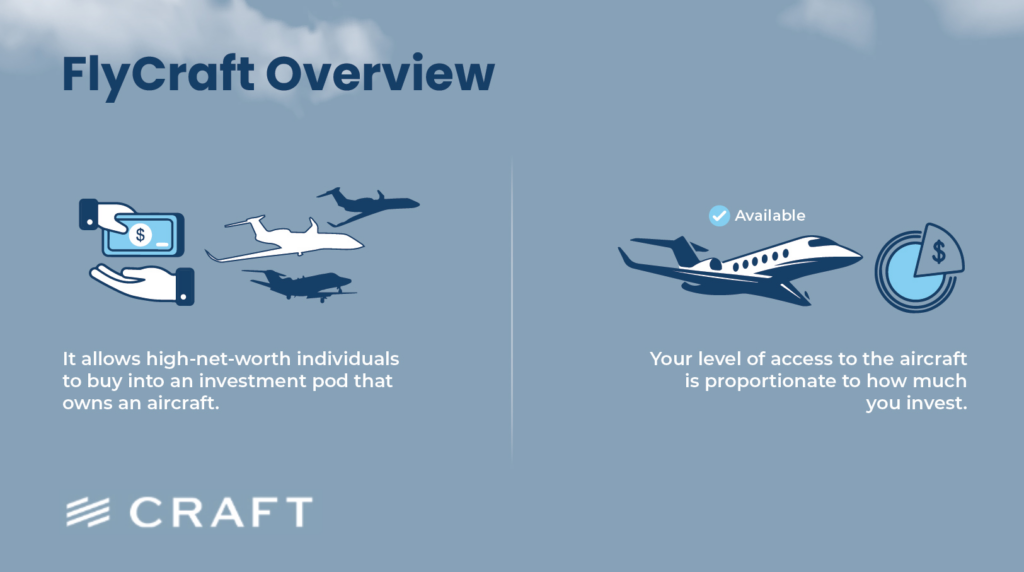
Craft does not operate under a traditional fractional ownership model. Instead, it allows high-net-worth individuals to buy into an investment pod that owns an aircraft.
From an experiential standpoint, the distinction is relatively modest. You’re still given high levels of access to comfortable super midsize jets, such as those in the Bombardier Challenger 300 class.
Your level of access to the aircraft is proportionate to how much you invest. Investments generally begin in the six-figure range, but can extend considerably beyond that.
Because this model is so distinct, Craft does not offer a traditional jet card program. However, they may utilize more conventional charter-style fee structures for one-off flights.
Who Craft Is For
Craft is a great alternative to fractional debt ownership models if you’re the type of person who flies frequently and needs a high level of access.
You can get everything you’re looking for from Craft, but without many of the headaches that come from a traditional fractional model.
Because the investment structure is more diversified, you’re less exposed to the risk of depreciation.
Contact Us Today to Learn More
To learn more about Craft’s unique take on fractional jet ownership, contact us today to set up a video conference.
We’ll not only explain our unique investment configuration for immediate access to aircraft ownership, but we will go into detail on our cabin classes, fixed hourly rates, and other factors that contribute to the private aviation experience you are seeking.
Frequently Asked Questions
What is fractional jet ownership?
Fractional jet ownership lets you buy a fraction of an aircraft instead of whole aircraft ownership. This provides access to private aviation with lower upfront costs, reduced administrative costs, and a seamless private aviation experience. Owners share the fleet, crews, and operations managed by the provider.
How much does fractional jet ownership cost?
Fractional jet ownership cost includes the purchase price, a monthly management fee, and an hourly rate for flights. Costs cover fuel, maintenance, insurance, hangar space, and FAA compliance. Jet card programs offer fixed hourly rates without ownership but no depreciation benefits or investment potential.
When is fractional ownership better than a jet card?
Fractional private jet ownership makes sense for frequent flyers with more than 50 flight hours per year. It offers immediate access, reliable scheduling, and personalized service. Jet cards suit travelers flying less often who want predictable costs without unused hours or ownership responsibilities.
Are there hidden fees in ownership or jet cards?
Fractional ownership may include ferry fees, variable hourly rates, or charges for cabin classes and aircraft range. Jet cards may have limits on destinations or peak-demand flights. Understanding costs upfront avoids surprises.
What level of access and service do owners get?
Fractional owners usually have priority access over jet card members. Programs provide consistent crews, personalized service, and higher safety and reliability than standard private charter flights.
Can you sell or exit a fractional ownership share?
Yes. Owners can sell their fraction after the program term, recovering part of the investment minus depreciation. Jet cards do not offer resale, though some allow limited refunds for unused hours.
How is safety regulated in fractional programs?
All fractional jet and jet card providers operate under FAA rules. Programs ensure pilot training, maintenance, insurance, and fleet oversight, making business aviation safer and more reliable than ad hoc private charters.