Ownership Cost
Fractional Ownership vs. Long-Term Leasing: Comparing Commitment and Financial Risk
Fractional ownership and long-term leasing are two competing but ultimately similar options for travelers who want access, convenience, and luxury without the…
 Israel SlodowitzFounder & CEOUpdated February 2, 2026 · Published January 21, 2026 · 5 min read
Fractional ownership and long-term leasing are two competing but ultimately similar options for travelers who want access, convenience, and luxury without the prohibitive cost or extensive managerial overhead that comes with exclusive plane ownership.
While the experiences between these two services are comparable, they’re also ultimately distinct.
Fractional jet ownership involves buying into a plane that is at least in part yours. Long-term leasing, on the other hand, is strictly rental-oriented.
In this article, we explore the ins and outs of both options, explaining how they work and helping you to determine which is best for your needs.
Fractional Jet Ownership Overview
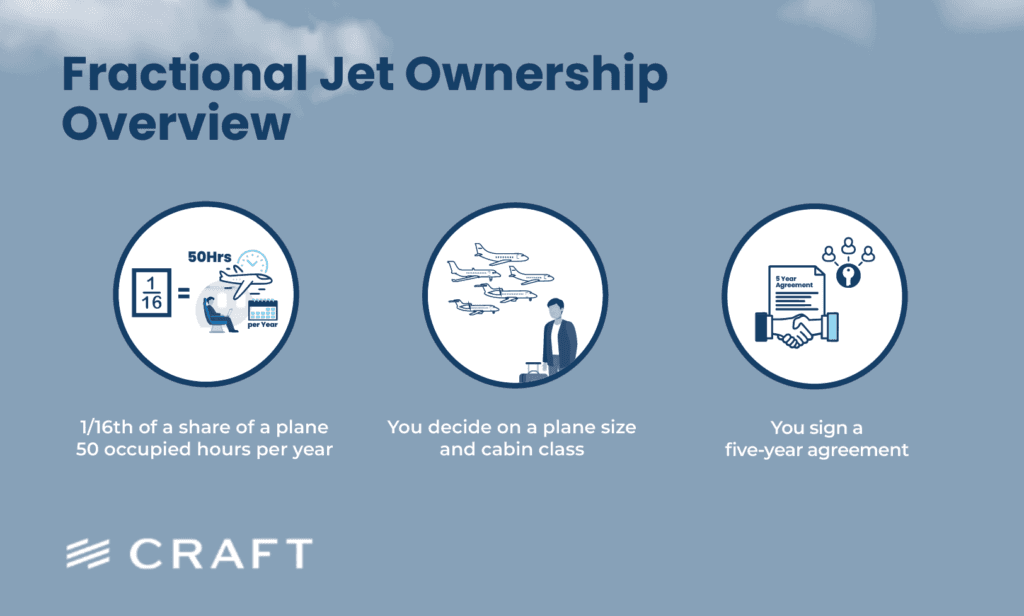
Fractional jet ownership is a system in which you’re able to buy into a piece of a plane. For example, most services begin at 1/16th share quantities and go up from there.
A typical 1/16th of a share of a plane correlates to 50 occupied hours per year. This means that you’re allowed to fly in the plane you bought into for 50 hours a year.
There will be repositioning flights to get the plane to you, but these will typically not count against your annual flying allotment.
The process for fractional jet ownership looks like this:
- You review multiple services to determine which best aligns with your needs and expectations.
- You decide on a plane size and cabin class.
- You select the fractional share that best represents your private aviation needs.
- You sign a five-year agreement.
- Once your agreement has lapsed, you have the option to either sell your fraction of the plane or renew your agreement. Some people will sell and then buy into another newer plane from the same service provider.
Much of the work is done on the front end as you weigh all of your options and figure out which plane and service provider is right for you.
Fractional Ownership Personalization Options
Despite the fact that you are putting your money into a real aircraft, the plane that you purchase a share of may not be the one you actually ever wind up using.
Most services will instead prioritize speed and convenience by sending a plane that is nearest to you.
It will be identical to the one you purchased into, but it may not be exactly the same. Fractional ownership programs will, however, allow you to have a say in your catering options.
They will also often allow you to request pilots or crew members, subject to availability. In this way, you gain a sense of personalization and continuity, despite the fact that the plane itself may vary.
Fractional Ownership Shortcomings
There are a few things that may be limiting or disappointing about fractional ownership. One of them is that, despite the fact that you’ve bought into a plane, you don’t have the level of access that one commonly associates with true private jet ownership.
Every company will have its own lead time, which refers to the amount of advance notice they will require to process your reservation.
On days that are low in demand, it may be possible to get a plane within a few hours. However, a more realistic lead time is 24 to 72 hours.
Some services will give you the opportunity to pay more for a smaller lead time, but in general, the responsiveness that you experience with fractional jet ownership, while concierge-level in quality, is not as immediate as you would get with true ownership.
You may also find that you are unable to get flights during peak travel periods. For example, Thanksgiving, Christmas, or even the weekend of the Super Bowl.
The final thing to keep in mind is that despite the fact that you are buying into something that will produce equity, it’s ultimately an investment that is very vulnerable to depreciation.
The money that you put into a fractional ownership program will lose approximately 30% of its value by the time you’re ready to sell your share.
Who is a Good Fit for Fractional Ownership?
All of these things in mind, who is going to benefit the most from a fractional jet ownership program? The ideal customer is someone who travels exclusively private more than 30 hours per year. At this stage, leasing a plane is no longer the most financially efficient way to travel. It’s also most likely going to be inadequately efficient when it comes to accessibility. In other words, a leasing service, no matter how well managed it is, will most likely not be able to facilitate the level of on-demand access that a fractional jet ownership service routinely provides.
At between 30 to 50 hours of occupied airtime per year, you’re getting the most out of your investment. If you wind up using less than the allotted 50 hours per year, some services will even allow you to sell off unused hours. This can help offset the cost and make it easier for more moderate travelers to justify fractional ownership over long-term leasing.
Long-Term Leasing Overview
With a long-term leasing agreement, you often wind up committing to similar terms as fractional ownership.
In this framework, you agree to charter a plane for a preset amount of time, typically one to five years.
During this agreement, you have a predetermined level of monthly access to the plane. The service that you’re using handles storage, maintenance, crew training, and so on, while you focus simply on arranging the flights.
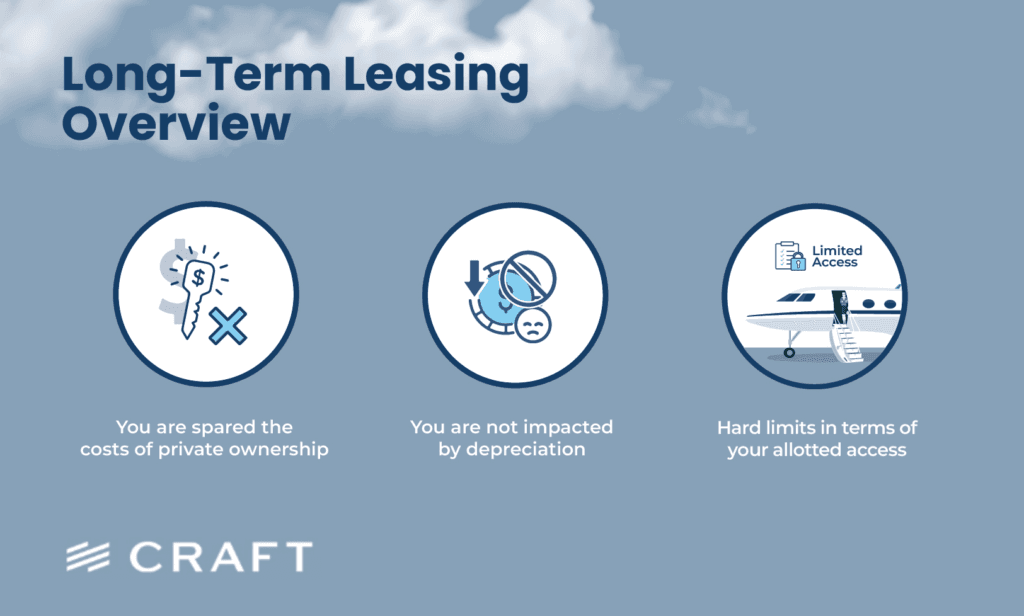
The benefits of long-term leasing are that you are spared the costs of private ownership and that you are not impacted by depreciation the same way you would be with a fractional program.
Leasing limitations, like fractional ownership, include hard limits in terms of your allotted access.
While they may or may not be subject to lead time constraints, they ultimately still come with less control than you would experience from total ownership.
Long-term leasing can also be less cost-efficient than fractional ownership in that none of the money you put into the experience is retrievable later on in the form of equity.
Who Long-Term Leasing Is For
Long-term leasing is a turnkey private aviation solution for big businesses that don’t want to buy and maintain their own plane, as well as high-income individuals who fly for 50 hours a year or more.
It’s a good alternative to fractional jet ownership for people who do not want any of the headaches that can come with owning even a fraction of a plane.
Craft Does Things Differently
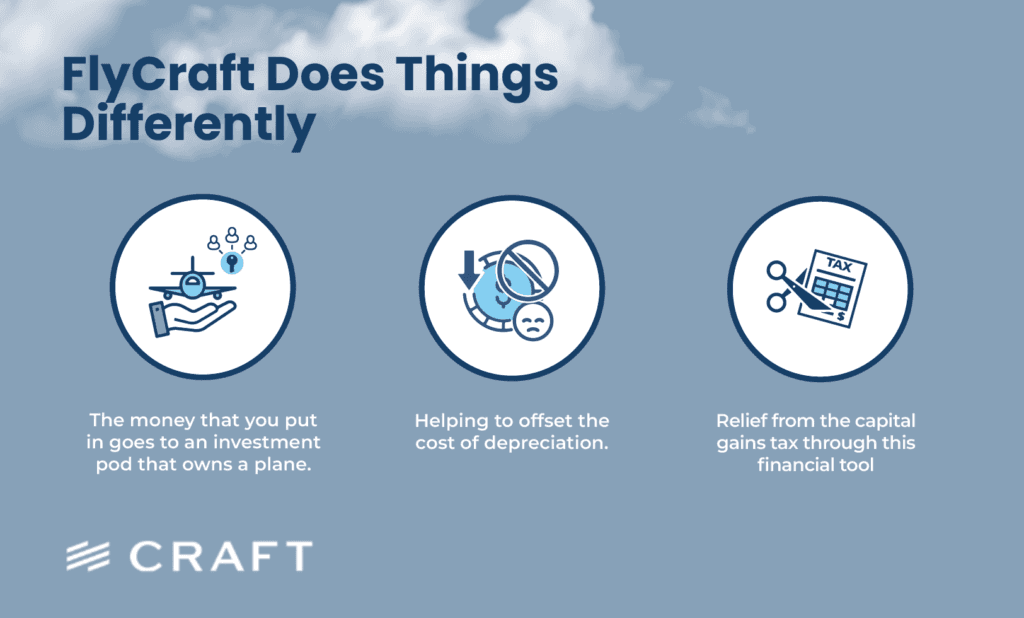
Craft is more similar to fractional ownership than it is to long-term leasing. However, the financial structure of your investment is different.
The money that you put in goes not to a plane, but to an investment pod that owns a plane. The pod itself is diversified, helping to offset the cost of depreciation. You also may be subject to relief from the capital gains tax through this financial tool.
In terms of accessibility, the arrangement is similar to both fractional ownership and long-term leasing.
You make an initial investment, generally beginning in the six-figure range. The amount of money you put into the pod directly correlates to how much access you are given to the plane.
If you’re interested in learning more about how Craft does things differently, book a call with us today.
Not only will we explain how our investment structure works, but we’ll tell you about our fleet, our lead time requirements, our fee structure, and we will explain how our concierge-level service works.
Frequently asked questions
What is the difference between fractional ownership and long-term jet leasing?
Fractional ownership allows you to buy a share of a private jet, giving you equity in the aircraft and guaranteed access for a set number of annual flight hours.
Long-term jet leasing, on the other hand, is a rental-based solution where you pay for aircraft access without building ownership, making it a more predictable cost but without equity. Both options provide access to private aviation and concierge-level service.
Who benefits most from long-term jet leasing?
Long-term jet leasing is ideal for businesses and frequent flyers who want the convenience of private aviation without the significant financial commitment or maintenance responsibilities of full ownership.
It provides predictable costs, fixed hourly rates, and unmatched access for regular private flights. Leasing programs are a smart choice for travelers seeking a turnkey private flight experience.
What are the main costs associated with fractional ownership and long-term leasing?
Fractional ownership requires an initial capital outlay for your share of the aircraft, plus monthly management fees, occupied hourly rates, and indirect costs like fuel surcharges, landing fees, and aircraft management.
Long-term jet leasing generally includes a monthly lease and fixed hourly rates, plus fuel and maintenance, offering more transparent pricing and predictable costs.
Both approaches may have unused hours, but fractional ownership allows partial recovery of value if you sell your share.
How does aircraft access compare between fractional ownership and long-term leasing?
Fractional owners typically enjoy guaranteed availability within 24–72 hours, depending on the provider and lead times, while long-term leases offer pre-determined monthly access to the aircraft.
Both provide access to a diverse fleet, ultra long range jets, and a range of cabin classes, but full ownership still delivers unmatched flexibility.
Fractional and lease programs allow clients to enjoy access without managing a full-time aircraft.
Can fractional ownership or leasing programs be customized to specific travel needs?
Yes. Fractional ownership programs often allow requests for pilots, crew, catering, and even ground transportation, giving personalized private travel experiences.
Long-term jet leasing may offer similar service tiers, including charter market access and flexible scheduling, though customization is tied to lease agreements and available aircraft.
Both are suitable for frequent flyers or businesses with complex travel plans.
Are fractional ownership or long-term leases cost effective compared to owning a jet?
For most travelers, yes. Fractional ownership and long-term jet leasing avoid the significant financial commitment, tax implications, and indirect costs associated with owning a full private jet.
With predictable costs, transparent pricing, and the ability to select only the flight hours you need, both are attractive options for private travel without paying for full ownership.
What should clients consider when choosing between fractional ownership and a lease program?
Clients should consider annual flight hours, level of control, access requirements, and their travel style. Fractional ownership builds equity and may allow resale of unused hours, while long-term leases offer predictable costs and minimal administrative responsibilities.
Your choice depends on whether you want ownership benefits, unmatched access, or a simple, turnkey private flight solution.
Related
Related guides
Read next
NetJets Fractional Ownership: Costs, Fleet, Pros & Cons (2026 Guide)
Complete guide to NetJets fractional ownership — pricing from 1/16 shares to jet cards, fleet details, management fees, hourly rates, and how it compares to…
April 10, 2026 · 5 min read
Fractional Jet Ownership Companies Compared
The main fractional jet ownership companies, how their shares, monthly fees and hourly rates work, what each one publishes about its jet cards, and how to compare them.
October 4, 2026 · 9 min read
The Ultimate Private Aviation Comparison: Fractional, Charter, Jet Card, and Whole Ownership
There are lots of ways to fly privately. All of them come at different price points while also providing different levels of access, convenience, and required…
February 3, 2026 · 6 min read


Charter Sales
Tell us the trip. We'll tell you the number.
Route, dates, rough timing, how many people. That is enough to start, and you get a firm price for that specific trip rather than a range.
Text us and you'll get a reply within 60 seconds, any hour.