Ownership Cost
Private jet financing: how jet loans work
How private jet financing works: credit- vs asset-based jet loans, 15% to 40% down, 10 to 15 year amortization with a balloon, what jet lenders look at, tax pointers and how charter revenue offsets ownership.
 Natan BenchimolExecutive Vice PresidentUpdated October 11, 2026 · Published May 1, 2026 · 4 min read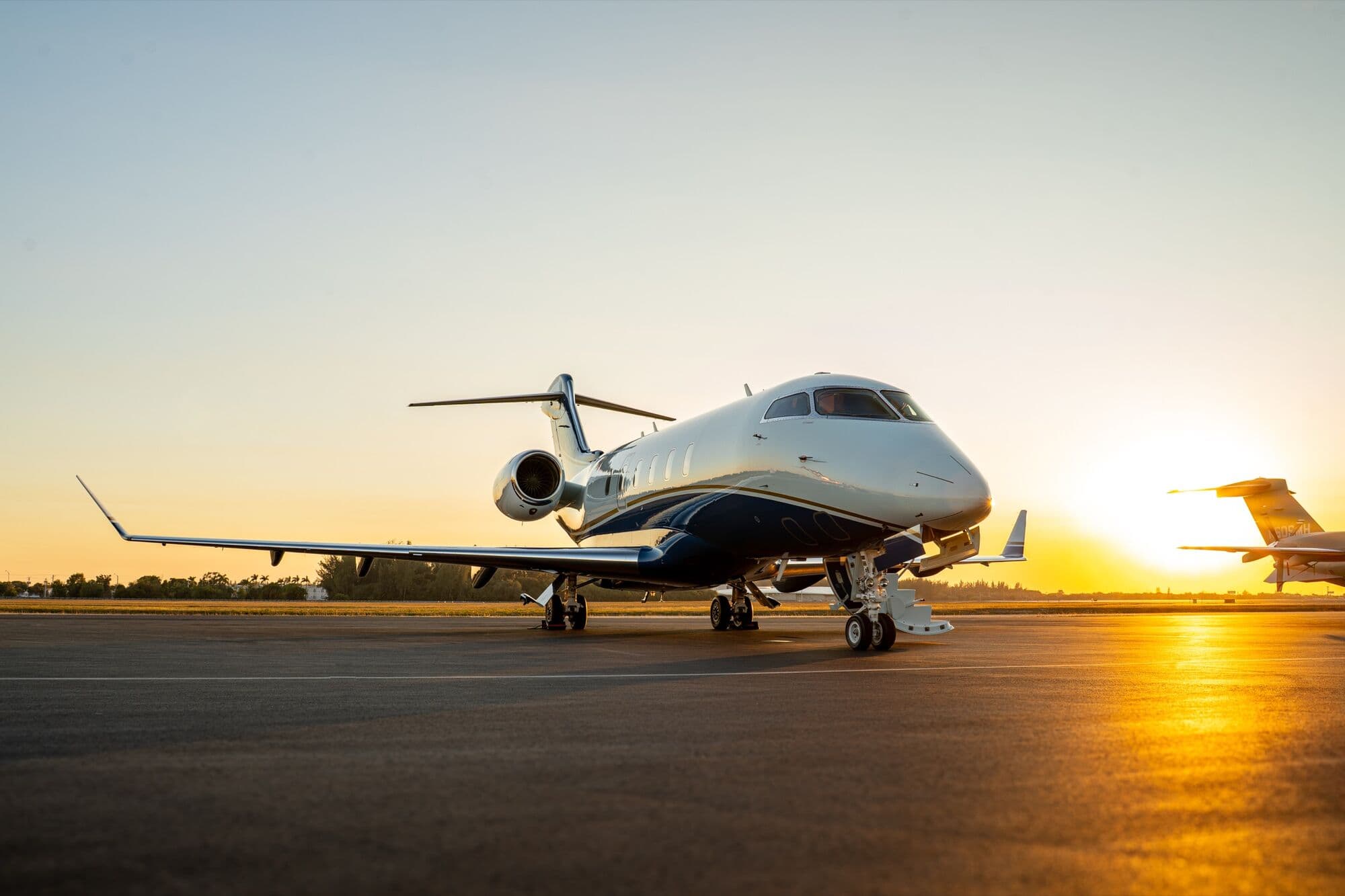
The short answer: most private jets are financed with a loan secured by the aircraft. AOPA Aviation Finance describes jet loans as needing 15% to 20% down when they're credit-based, or 30% to 40% when they're asset-based, amortized over 10 to 15 years with a five-year term and a balloon for the remaining balance. The rate is priced off public benchmarks plus a margin for you, the jet and the structure. Charter revenue from a leaseback can offset part of the cost of owning the jet.
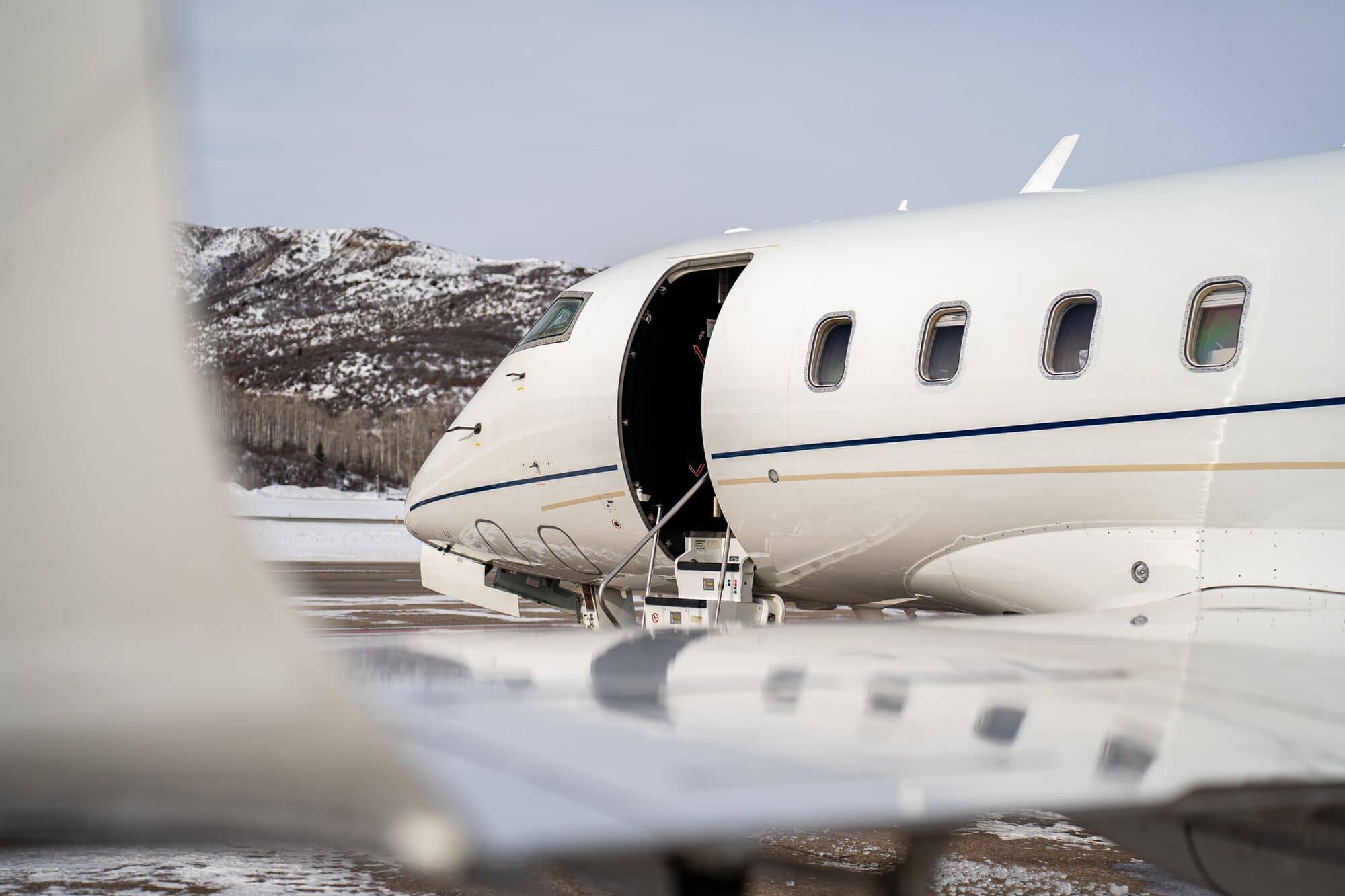
CRAFT operates an all-Challenger fleet under FAA Part 135. Owners who are thinking about putting a jet on our certificate ask us these questions before they buy, so this guide answers them with sources.
How a jet loan works
A jet loan is a secured loan: the lender records a lien against the aircraft with the FAA, and because jets are covered by the Cape Town Convention, also registers its interest on the International Registry. You make monthly payments of principal and interest. Because jets are expensive and hold a lot of their value, lenders commonly separate two numbers:
- Amortization: the period the payment is calculated over, often 10 to 15 years, sometimes up to 20 for turbine aircraft.
- Term: how long the loan actually runs, often five years. At the end of the term the remaining balance (the balloon) is due, and most owners refinance, pay it off or sell.
A balloon keeps the payment down. It also means you will face the interest rates of the day when the term ends, and the jet's value then needs to support the balance. The aircraft loan calculator has a balloon field to model exactly this.
Credit-based vs asset-based jet loans
| Credit-based | Asset-based | |
|---|---|---|
| Lender relies mainly on | Your income, liquidity and credit | The jet's value |
| Down payment (AOPA Aviation Finance) | 15% to 20% | 30% to 40% |
| Underwriting focus | Financial statements, tax returns, liquidity | Appraisal, records and condition of the jet |
| Often used by | Borrowers with strong, documented finances | Borrowers whose finances are harder to document, or who want to rely on the asset |
Source: AOPA Aviation Finance, exploring aircraft financing options for jet purchases, February 1, 2025.
Who lends on private jets
Jets are mostly financed by banks with aviation divisions, private banks (often for clients with wider relationships), specialist aviation lenders and aviation finance firms that work with several lenders. Manufacturers' finance arms support sales of their own new aircraft. Our aircraft lenders directory lists firms that advertise jet financing, with what each says it finances.
Rates for jets are rarely published. Where they are, they're starting rates for strong borrowers on newer aircraft. Our aircraft loan rates page tracks the benchmarks jet loans are priced from and the rates lenders do publish, each with its date.
What jet lenders look at
Beyond your finances, a jet lender underwrites the jet itself:
- Title, liens and registration, including the International Registry for jets and their engines.
- Records: logbooks, inspection status and airworthiness directive compliance. Gaps lower the value a lender lends against.
- Engine program: most turbine lenders require one, and enrollment makes a jet easier to finance and to sell.
- Value and age: lenders lend a share of an appraised value, and some set age limits.
- Use and base: Part 91 private use, Part 135 charter use, and where the jet is based and flies.
- Insurance: the lender named as loss payee with a lienholder's endorsement.
Each of these is explained in aircraft financing: what lenders check.
What a jet costs a month
A loan payment is one line of the monthly cost. The rest is operating the aircraft: crew, hangar, insurance, maintenance, engine reserves and fuel. Using the same example assumptions as our calculator (20% down, 15 years, the prime rate as an example rate, 200 flight hours a year):
| Aircraft | Example price | Loan payment a month | With operating cost |
|---|---|---|---|
| Embraer Phenom 300E | $9.1 million | $65,435 | $162,462 |
| Cessna Citation Latitude | $18 million | $129,431 | $264,151 |
| Bombardier Challenger 300 | $9.3 million | $66,873 | $216,678 |
| Bombardier Challenger 350 | $18 million | $129,431 | $280,828 |
| Gulfstream G280 | $19 million | $136,622 | $286,773 |
| Bombardier Challenger 650 | $18 million | $129,431 | $326,354 |
| Gulfstream G650 | $39 million | $280,434 | $570,733 |
Illustrations, not offers: 20% down, 15-year amortization at 7.00% (the U.S. bank prime rate, 7.00% on October 2, 2026 (Federal Reserve H.15), used only as an example rate). Example prices are the median of UseRadar's value data for each model; operating cost is our ownership cost model at 200 hours a year. Change any of it in the aircraft loan calculator.
For the full cost line by line, see each model's ownership cost page, which now shows this financing estimate too.
Tax and depreciation: what to ask your adviser
We're not tax advisers, and the rules depend on your facts. These are the points owners raise with their advisers, with the official sources:
- Bonus depreciation. The IRS says the 100% additional first-year depreciation is permanent for eligible property acquired after January 19, 2025 (Notice 2026-11).
- Listed property. IRS Publication 946 treats business aircraft as listed property. Accelerated depreciation requires meeting the qualified business use tests, determined flight by flight, and falling below them later means recapture.
- Entertainment use. Deductions for aircraft used for entertainment are limited under 26 CFR 1.274-10.
- Depreciation in the market. Tax depreciation is not market depreciation. See what jets actually lose in value in our private aviation depreciation rates.
Our leaseback page explains how these points apply when a jet is leased to a Part 135 operator for charter.
Offsetting the cost with charter
Fixed costs such as crew, training, hangar and insurance run whether the jet flies or not. One way owners spread them is a leaseback: the jet flies charter on an operator's Part 135 certificate between the owner's own trips, and the revenue goes toward its costs.
In a CRAFT leaseback, a Challenger 300 or 350 you own flies on our certificate. We carry crew, maintenance and compliance, you fly your own trips on it, and you can fly the rest of our Challenger fleet when your tail is in maintenance. If you're financing the jet, tell your lender about the leaseback at the start: they'll want to approve charter use and see the lease to the operator.
If you would rather not own at all, a Fleet Jet Card buys hours on our Challengers at published rates, with no aircraft, loan or lender involved.
Get matched with an aircraft lender
Tell us what you're buying.
We'll pass your request to aircraft lenders who finance that kind of aircraft, so they can quote you a real rate. No credit details needed here, and nothing is a loan offer: CRAFT is not a lender.
Sources
- AOPA Aviation Finance, exploring aircraft financing options for jet purchases (February 1, 2025) and turbine and turboprop
- Textron Aviation, financing a private aircraft 101
- IRS, guidance on the additional first-year depreciation deduction (IR-2026-06, January 14, 2026) and Publication 946
- eCFR, 26 CFR 1.274-10
- FAA, Cape Town Treaty
All checked October 11, 2026.
Frequently asked questions
How much do you need to put down on a private jet?
AOPA Aviation Finance says a credit-based jet loan usually needs 15% to 20% down, and an asset-based loan, which leans on the aircraft's value rather than your finances, generally 30% to 40%. On an $18 million jet that is roughly $2.7 million to $7.2 million.
How long is a private jet loan?
Jet loans are often amortized over 10 to 15 years with a five-year term, leaving a balloon payment for the remaining balance at the five-year mark, according to AOPA Aviation Finance. Some lenders amortize turbine aircraft over up to 20 years. At the balloon you refinance, pay it off or sell the aircraft.
What is the monthly payment on a private jet?
It depends on the price, down payment, rate and term. As an illustration, a Challenger 350 at $18 million (the median of UseRadar's value data for the model), 20% down and a 15-year amortization at a 7% example rate comes to a little under $130,000 a month before operating costs. Work your own numbers in our aircraft loan calculator.
Can I write off a private jet?
A jet used in business can qualify for depreciation deductions, including bonus depreciation, which IRS guidance says is back at 100% for qualifying property acquired after January 19, 2025. Business aircraft are listed property, so they must meet qualified business use tests, and personal and entertainment use limit deductions. This depends entirely on your facts: ask a tax adviser who works with aircraft.
Can charter revenue pay for a private jet?
It can offset part of the cost, not usually all of it. In a leaseback, your jet flies charter on an operator's Part 135 certificate between your trips, and the revenue goes toward fixed costs such as crew, hangar and insurance. Lenders need to approve charter use, so raise it early.
Related
Related guides
Aircraft in this guide
Read next
Financing
Aircraft loan rates: today's benchmarks and published rates
Aircraft loan interest rates explained: the prime rate, Treasury yields and SOFR lenders price from, rates lenders publish with their dates, and what moves the rate on your loan.
October 11, 2026 · 3 min read
Bombardier Global 8000 Ownership & Operating Costs
What the Bombardier Global 8000 costs to buy, charter and run: its $85 million new price, specs (8,000 nm, Mach 0.95, 19 passengers) and how it compares with the Global 7500.
October 10, 2026 · 1 min read
Bombardier Challenger 3500 Ownership & Operating Costs
What the Bombardier Challenger 3500 costs to buy, charter and run: about $29.5 million new, its specs (3,400 nm, 10 passengers) and how it differs from the Challenger 350.
October 11, 2026 · 2 min read


Charter Sales
Tell us the trip. We'll tell you the number.
Route, dates, rough timing, how many people. That is enough to start, and you get a firm price for that specific trip rather than a range.
Text us and you'll get a reply within 60 seconds, any hour.