Jet Cards
Fixed Rate Versus Dynamic Pricing Jet Cards: Which Model Saves You More Money?
Jet cards provide high levels of access and convenience for private aviation.
 Israel SlodowitzFounder & CEOUpdated January 16, 2026 · Published December 26, 2025 · 5 min read
Jet cards provide high levels of access and convenience for private aviation. That said, there are many different options among jet card programs and jet card providers.
Two core models—fixed rate versus dynamic pricing jet cards—are a significant source of confusion for many people deciding which to choose.
Fixed rate cards lock you into a fixed hourly rate. For example, most often that will be $5,000 to $12,000 per occupied air hour, depending on the aircraft category you buy into.
This locks you into the same price, regardless of seasonality or changing fuel prices.
Dynamic pricing adjusts in real time based on aircraft availability, demand, and market conditions. For example, a flight might cost $6,500 an hour on Tuesday and $12,000 on Saturday for the same route.
There’s no universal winner. The best option for you will depend on how frequently you fly and how urgently your needs arise.
In this article, we provide a quantified decision framework to help you understand the cost-to-benefit analysis.
Fixed Rate Cards
It’s important to understand that fixed rate cards generally come with an upfront premium of approximately 8% to 15% more than you would pay with a variable-rate card. The exact mechanism looks like this:
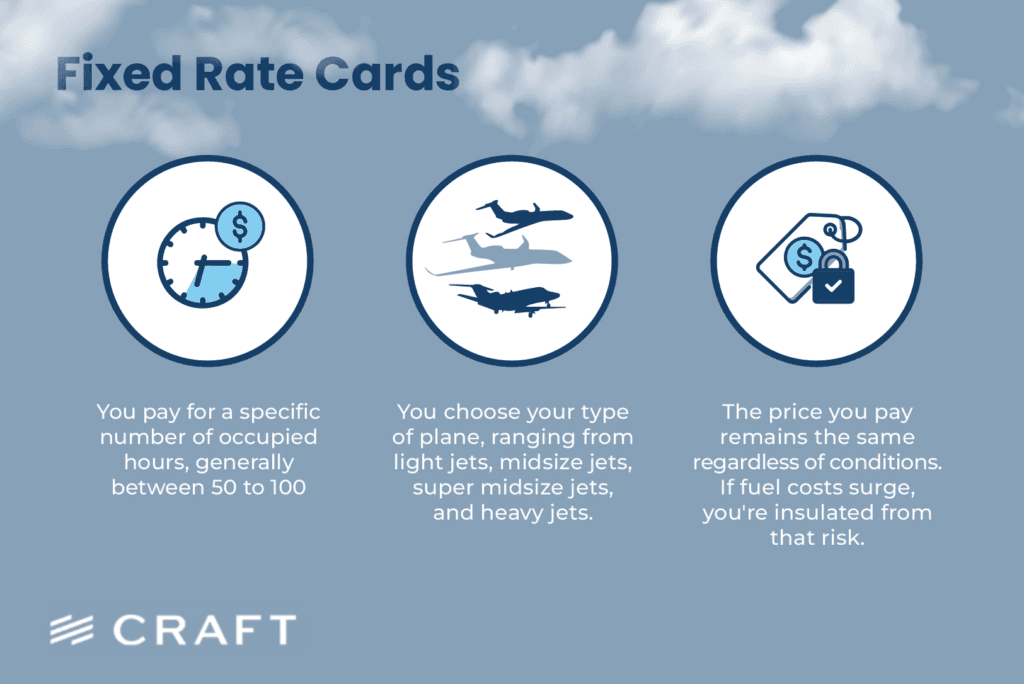
- You pay for a specific number of occupied hours, generally between 50 to 100, though some services allow you to purchase more.
- You choose your type of plane, ranging from light jets, midsize jets, super midsize jets, and heavy jets. The occupied hourly rate increases based on the aircraft size.
- The price you pay remains the same regardless of conditions. If fuel costs surge, you’re insulated from that risk. You’re also spared surge pricing over high-demand periods.
Fixed rate cards are ideal for people who have a constant need for private air travel and may not always be able to arrange flights based on cost sensitivity.
In other words, if something comes up on an in-demand day and you can’t wait for a period when rates are a little lower, you’re paying an advantageous price compared to someone with a variable rate card.
You pay extra on the front end, but hypothetically, you may save money by avoiding premium costs later.
Dynamic Pricing Cards
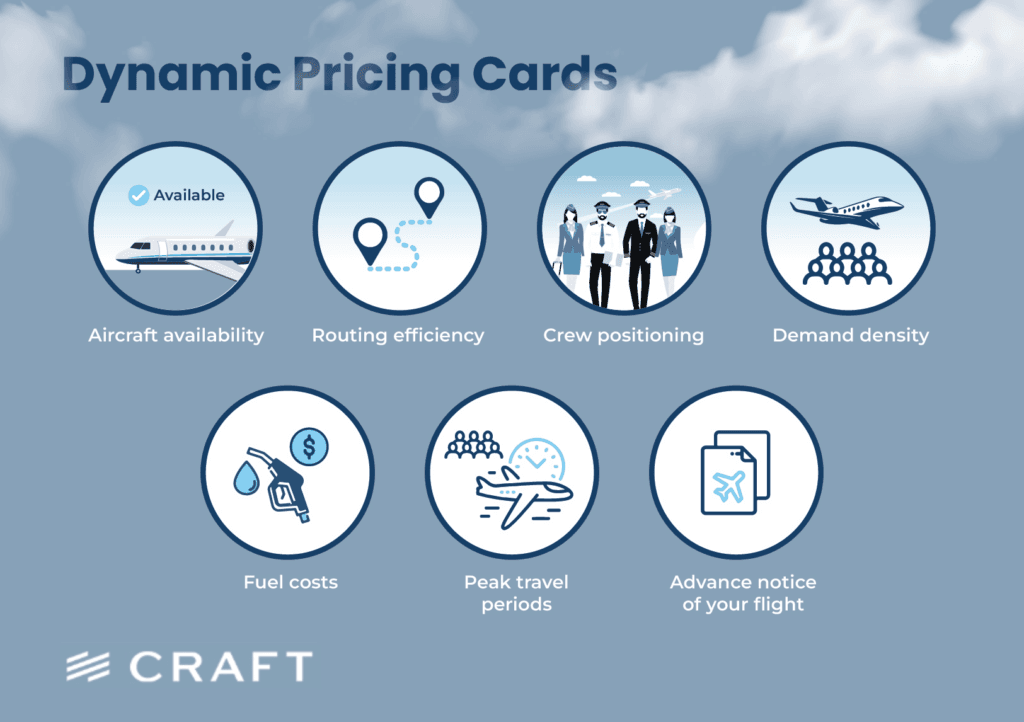
Dynamic pricing cards require a smaller upfront deposit, but your rates will fluctuate more frequently. Several factors contribute to price variation, including:
- Aircraft availability
- Routing efficiency
- Crew positioning and repositioning flights
- Demand density
- Fuel costs
- Peak travel periods and high-demand periods
- Advance notice of your flight
In practice, this means that if you’re located in a less common route or consistently need flights during peak periods, you will likely pay premium pricing on a regular basis.
On the other hand, if your schedule is flexible and your travel needs are rarely urgent, you may often benefit from lower, more advantageous rates.
Dynamic pricing can save money for frequent travelers who are willing and able to plan around fluctuating costs, but it comes with less predictability than fixed rate pricing.
Identifying Your Traveler Profile
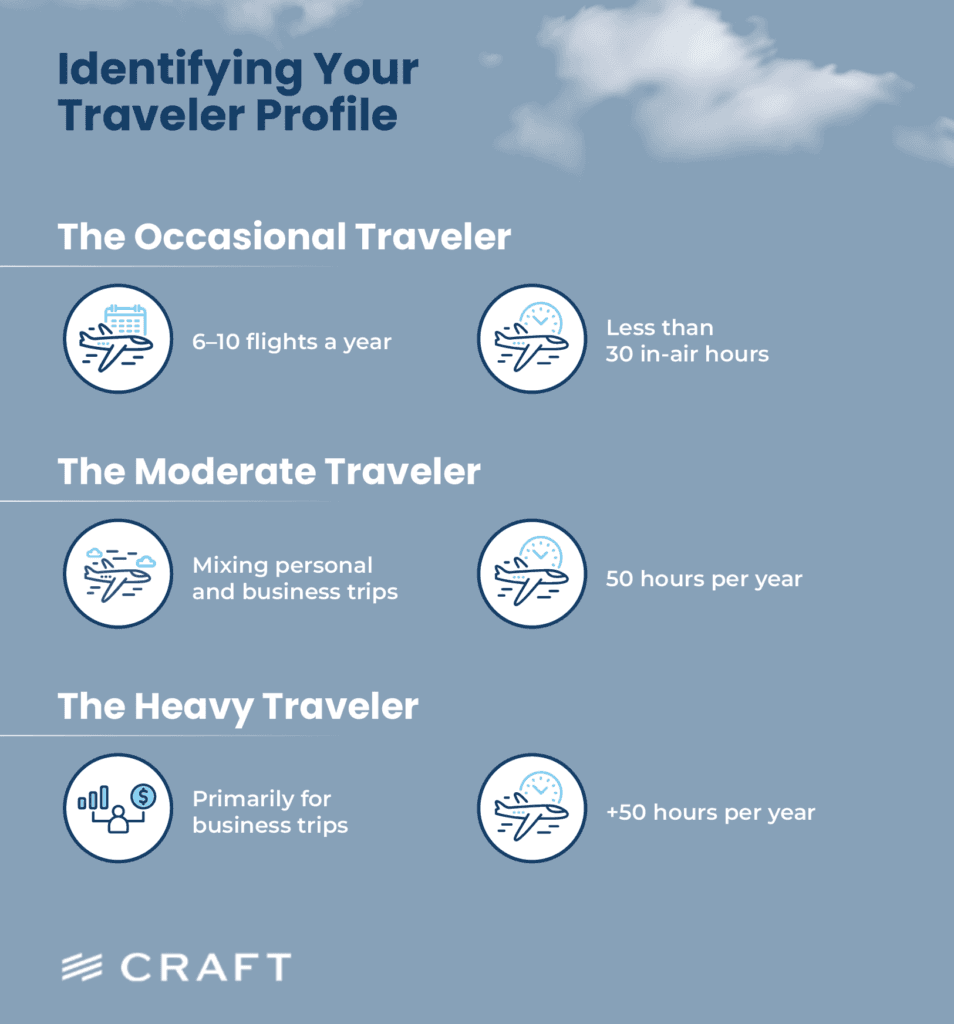
There is no objectively better option, but the way you approach travel will help determine which pricing model makes the most sense for you.
In the next few headings, we provide general user profiles and how they might experience each option.
The Occasional Traveler
People in this category may take 6–10 flights a year, totaling less than 30 in-air hours. Their arrangements often allow for flexibility.
Business may factor into travel occasionally, but most trips are personal—vacations, visits between homes, or family commitments.
Convenience and access are important, but they are also willing to be somewhat flexible if the difference in price between one day and the next reaches five figures.
This type of traveler will most likely benefit from a dynamic pricing model. They can avoid surge pricing because their travel needs are rarely urgent, and they typically do not fly enough to justify the higher upfront costs associated with fixed-rate cards.
The Moderate Traveler
Moderate travelers may spend closer to 50 flight hours per year in the air, mixing personal and business trips.
Their needs are generally flexible, but can occasionally become urgent, particularly for business obligations.
Price is still a consideration, but accessibility may take priority in certain situations. For these travelers, dynamic pricing can sometimes be more expensive because flexibility isn’t always an option.
In these cases, a fixed rate jet card may be justified, offering predictable pricing and guaranteed availability when timing is critical.
The Heavy Traveler
If you spend 50 hours per year in the air or more, primarily for business, your priorities are likely accessibility and convenience over price sensitivity.
In situations where being responsive is more important than being cost effective, a fixed rate jet card is almost always the best choice.
It guarantees guaranteed access when you need it most and, with sufficient usage, can result in meaningful savings over a dynamic pricing model.
Private Jet Card Comparisons: Flight Hours and Pricing Structures
When evaluating jet card providers and their pricing models, understanding how annual flight hours impact costs is essential for frequent flyers.
Many jet card programs offer both fixed rate pricing and market based pricing, but the cost effective choice depends on your actual flight time.
This comparison examines how light jets, midsize jets, super midsize jets, heavy jets, and large cabin jets perform under different pricing structures across peak travel periods and high demand periods.
Most programs charge a membership fee, and prepaid programs often include peak period surcharges that affect jet card holders differently based on their number of hours purchased and aircraft availability within the primary service area.
Annual Cost Comparison: Fixed Rate vs Dynamic Pricing
(Based on Aircraft Size and Flight Hours)

$600K |                                                    ██
      |                                                    ██
      |                                          ██        ██
$500K |                                          ██        ██
      |                                          ██        ██
      |                                ██        ██        ██
$400K |                                ██        ██        ██
      |                      ██        ██        ██        ██
      |                      ██        ██        ██        ██
$300K |            ██        ██        ██        ██        ██
      |            ██        ██        ██        ██        ██
      |  ██        ██        ██        ██        ██        ██
$200K |  ██        ██        ██        ██        ██        ██
      |  ██        ██        ██        ██        ██        ██
      |  ██        ██        ██        ██        ██        ██
$100K |  ██        ██        ██        ██        ██        ██
      |__██________██________██________██________██________██___
         30hr      30hr      50hr      50hr     100hr     100hr
       Dynamic    Fixed    Dynamic    Fixed    Dynamic    Fixed

       Light Jets    Midsize Jets    Super Midsize/Heavy Jets
Is Fixed Rate vs. Flex Rate Really the Right Question?
The truth is, price alone isn’t the main factor to consider. Jet cards are designed for convenience and accessibility, not bargain hunting.
On that front, fixed rate cards typically offer the most reliable private aviation experience. They allow you to arrange travel without worrying about seasonality or fluctuating fuel and upkeep costs.
If your travel needs are limited or rarely urgent, a variable rate card can still be a viable way to save money over time.
Ultimately, however, the ownership model has a much bigger impact on your private jet card experience than the pricing structure.
Do you have an actual stake in the plane, or are you essentially subscribing to an on demand charter service?
Can you sell your equity, or are you simply paying a recurring cost? What about unused hours—can you sublet them to offset expenses? These questions often matter far more than fixed versus variable hourly rates.
Craft offers a unique approach: the access of a traditional JetCard combined with a stabilized, diversified investment portfolio. It insulates you from depreciation risk and even has the potential to grow in value over time. If you want to see whether Craft is the right JetCard for your needs, reach out today to speak with one of our advisors.
Related
Related guides
Read next
Flexjet vs Craft: Fractional Shares vs a Fixed-Rate Card
Between FlexJet and Craft, both private aviation services, there are actually three distinct models of transportation.
February 3, 2026 · 5 min read
Ownership
What is a Private Jet Card? Your Ultimate Guide to Fixed-Rate Flying
Jet cards cater to a very particular kind of customer: private travelers who fly too often to fully benefit from chartering their planes, but who also don’t…
December 26, 2025 · 6 min read
Best Jet Cards of 2026: Jet Card Prices and Programs Compared
Jet card prices from 19 companies by cabin size, and NetJets, Flexjet, VistaJet, Sentient Jet, Wheels Up and CRAFT compared on callout, peak days and fees.
September 29, 2026 · 10 min read


Charter Sales
Tell us the trip. We'll tell you the number.
Route, dates, rough timing, how many people. That is enough to start, and you get a firm price for that specific trip rather than a range.
Text us and you'll get a reply within 60 seconds, any hour.