Ownership Cost
What is Fractional Jet Ownership?
Fractional Jet Ownership is one of the most rewarding and enjoyable ways to explore private aviation.
 Israel SlodowitzFounder & CEOUpdated February 3, 2026 · Published January 16, 2026 · 6 min read
Fractional Jet Ownership is one of the most rewarding and enjoyable ways to explore private aviation. It bundles the convenience of ownership with the limited stress of chartering a plane. You have equity in your aircraft, but you don’t have to worry about the exorbitant costs of total ownership, nor the maintenance, overhead, and complications that come with it.
In this article, we take a sweeping look at what Fractional Jet Ownership is, how it works, and why it might be the right fit for you.
What Does Fractional Jet Ownership Mean?
To participate in Fractional Jet Ownership is to literally purchase a fraction of a plane. Generally, shares start at $1/16 and can go up from there.
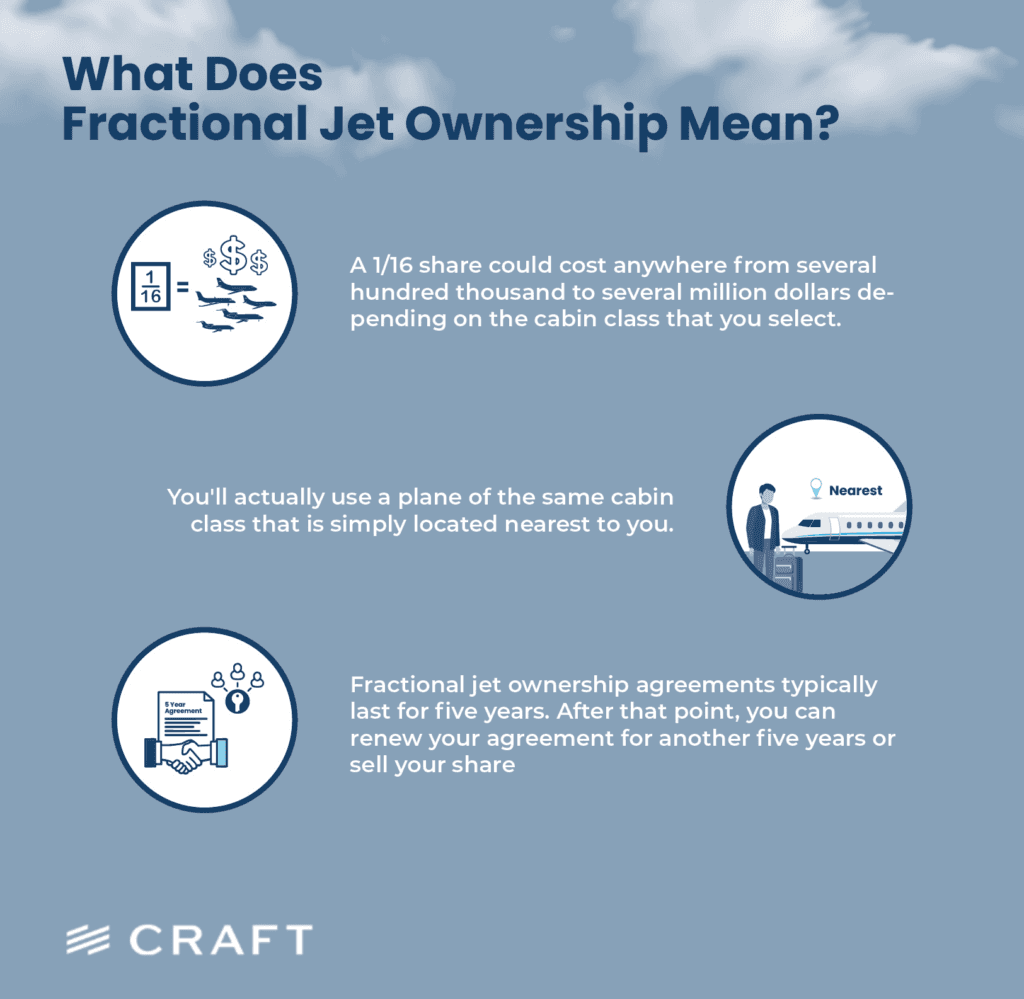
Here’s a breakdown of how it works. You pay a deposit proportionate to your stake in the plane. A 1/16 share could cost anywhere from several hundred thousand to several million dollars depending on the cabin class that you select. Your deposit not only buys you a part of a plane, but occupied airtime proportionate to the size of your contribution. A 1/16 share typically results in 50 occupied air hours, while a 1/8 share will result in 100, and so on.
You pay fees for utilization and maintenance. This will range from several tens of thousands per month depending on your size of a share. The occupied hourly rate, meanwhile, will vary based on the size of the plane, but generally costs in the five-figure range.
You are given access to a plane of the category that you bought into. Despite the fact that you own a fraction of a specific jet, you’ll actually use a plane of the same cabin class that is simply located nearest to you. This cuts down on lead time and provides logistic and operational ease on both sides of the equation.
Fractional jet ownership agreements typically last for five years. After that point, you can renew your agreement for another five years or sell your share of the plane minus the cost of depreciation and either walk away with the money or buy into a new plane.
How Much Notice Do You Need to Give for a Flight?
The amount of notice or lead time required will vary based on your membership tier and the specific abilities of the service that you choose.
Some services, for example NetJets, will have fluctuating lead time rates based on your contribution level, with larger share ownership correlating with shorter lead times.
A typical range for most providers is between 24 to 72 hours, though depending on the circumstances as well as your location, you may be able to book a flight within the same day.
People living in remote areas may have to pay a relocation fee to get the jet nearer to them, though this again depends on the policies of the service itself.
Many providers will also have limited access during peak travel periods such as Thanksgiving, Christmas, Fourth of July, or even during major events like Coachella or the Super Bowl. Some services will provide uninterrupted access even during peak periods for an additional fee.
What Services Provide Fractional Jet Ownership?
There are plenty of fractional jet ownership providers on the market. Arguably, the most widely known is NetJets.
NetJets is owned by Berkshire Hathaway. They were one of the first brands to be publicly utilized by celebrities, athletes, and big businesses. With a fleet of more than 800 planes worldwide, they also have the most robust network of fractionally owned planes on the market.
This is advantageous for several reasons. For one thing, it allows you to have easier access to remote locations. It also typically cuts back on lead time.
NetJets is considered one of the pricier services on the market, but since fractional jet ownership is not a consideration of the price conscious in most cases anyway, many buyers are more than happy to pay more for higher levels of access.
A prominent alternative to NetJets is FlexJet. FlexJet has a smaller network, but the service is comparable in terms of their fleet options. They have relatively favorable lead times of less than 48 hours in most cases, and they even have a unique feature of allowing members to sell back unused hours to other people within the network. That’s a good feature for people who may not use all of their occupied hourly allotments.
Who Fractional Jet Ownership is For
So who is the best candidate for fractional jet ownership?
Fractional jet ownership is ideal for people who travel privately for between 40 to 50 hours per year, or in some cases more depending on the level that you wish to buy into. At less than 30 hours, you’re better off either investing in a jet card or chartering your flights.
A jet card is ideal for regular travelers who just don’t quite require the extensive allotments of a fractional ownership program. For example, if you travel for 20 hours a year between multiple homes and vacation destinations, a jet card will provide all of the convenience you need for a lower price with fewer considerations and headaches in the bargain.
Chartering flights is similarly favorable for less frequent travelers, particularly those who fly only several times a year. More than that, and the jet card will still be advantageous. Jet cards, keep in mind, essentially provide you with a subscription to chartering flights. The only difference is that you lock in your rate and you guarantee availability during peak periods of travel.
The Limitations of Traditional Fractional Jet Ownership
Though there is plenty to be said about the convenience and value of fractional jet ownership for people who demand high levels of access to private travel, sometimes with very limited advance notice, there are also limitations that bear consideration.
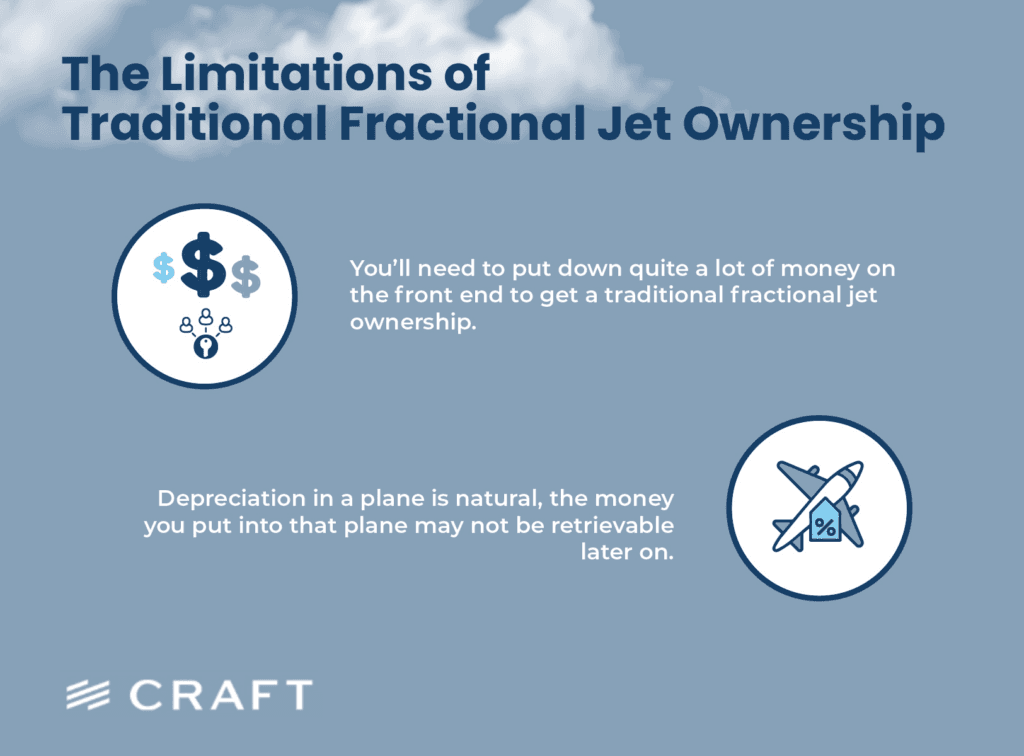
The first is that traditional fractional jet ownership is capital intensive. In other words, you’ll need to put down quite a lot of money on the front end to make it work.
The other issue is simply that the money you put into that plane may not be retrievable later on. Though you are able to sell your share later, it’s at a diminished monetary value. Depreciation in a plane is natural, of course, but it’s also not the most efficient use of your finances.
At Craft, we utilize a unique financial structure that provides the convenience of fractional jet ownership, but with a lower level of financial risk.
Craft’s Unique Model
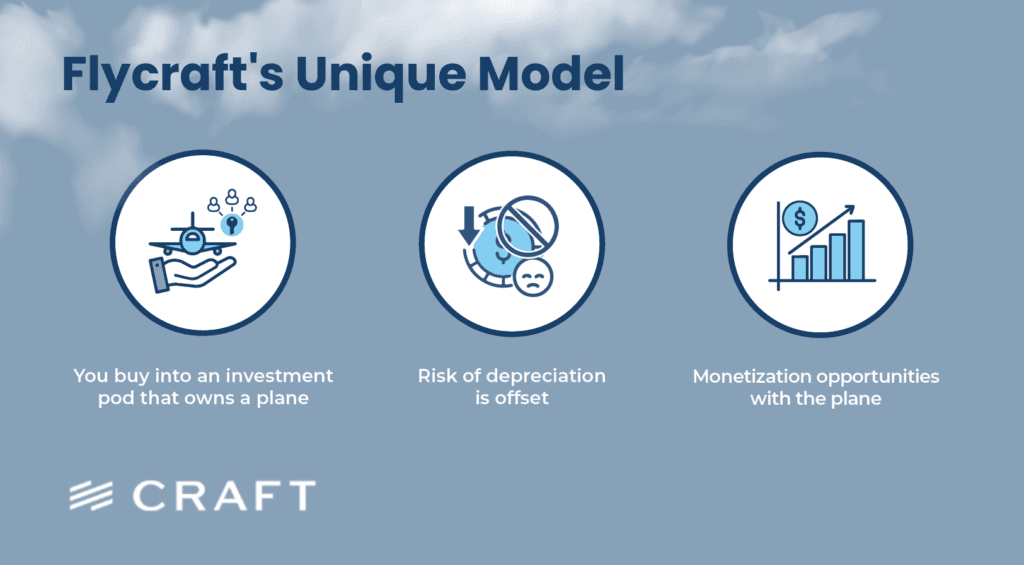
At Craft, owners put their money into a diversified investment pod. The pod itself owns the plane, along with other assets.
Because the pod is financially diversified, the risk of depreciation is offset by the potential upside of the other investments, along with monetization opportunities at the plane. For example, planes will sometimes be chartered, producing revenue that could increase the value of the investment pod over time.
The investment structure also may provide some relief from capital gains tax, further improving the financial value of the investment. All of these financial features exist within an infrastructure that is otherwise recognizable to fractional jet owners. You still have on-demand access to a private plane of your choosing.
Lead times are limited. Concierge-level service reduces any of the operational friction that you might be concerned with. The experience is centered around convenience and access, with an adjacent and impactful focus on the investment component.
If you’re interested in learning more about how Craft does things differently, set up a meeting today. We’ll walk you through everything you need to know about the investment pod structure of our service. We’ll also answer any questions you have about fleet options, cabin classes, lead times, service areas, and more. Don’t wait to find out how Craft can change the way you travel.
Frequently asked questions
What is fractional jet ownership?
Fractional jet ownership allows multiple individuals to buy a fractional share of a private jet, giving them guaranteed access to flight hours without the cost or responsibility of full ownership. Owners participate in an operated fleet rather than a single specific aircraft, and they share maintenance, hangar space, and pilot training costs. This makes fractional private jet ownership an efficient way for frequent flyers to fly privately.
How does a fractional jet ownership agreement work?
A fractional jet ownership agreement outlines the fractional ownership share, flight hours, and monthly management fees required. Fractional owners pay occupied hourly rates for actual flight time while the management company handles maintenance, engine reserves, and administrative costs. The agreement typically lasts for the entire term of five years, after which the share can be renewed or sold.
What costs are associated with fractional aircraft ownership?
Costs include an initial capital fee to purchase the fractional share, a monthly management fee covering pilot fees, hangar space, and management services, plus an occupied hour fee for actual flight time. Owners also face maintenance, engine reserves, and other administrative costs, which are often offset by depreciation deductions and potential tax benefits. Hidden fees may arise if flexible availability or additional flight options are required.
How is fractional ownership different from full aircraft ownership?
Fractional jet programs provide access to a private jet without requiring the full ownership of the aircraft. Multiple individuals share an undivided interest in the fleet, while each owner receives a proportionate amount of flight hours. This model reduces capital costs, monthly management, and maintenance burdens compared to whole aircraft ownership.
Who benefits most from private jet fractional ownership?
Frequent flyers who need short notice access to private flights benefit most from fractional aircraft ownership. Those requiring more hours or efficient travel between multiple locations find fractional ownership preferable to charter flights or a jet card. Fractional providers offer flexible availability and cabin classes suitable for diverse travel needs.
Can fractional owners use multiple aircraft?
Yes, fractional owners typically fly multiple aircraft of the same type within the operated fleet, improving flexible availability and reducing lead times. This ensures efficient travel and access without relying on a specific aircraft, while keeping pilot fees and maintenance costs shared among other owners.
What happens to unused hours in fractional jet ownership?
Unused flight hours may sometimes be sold back or banked depending on the fractional provider and purchase agreement. This allows owners to maximize the value of their fractional share and avoid paying for unused hours that could otherwise expire. Policies vary, so management agreements should clarify how occupied hourly rates are applied for flexible availability.
Related
Related guides
- Fractional Shares Explained: Choosing the Right Shares for Your Annual Flight Hours
- Fractional Ownership vs. Whole Plane Ownership: Which Offers the Most Control?
- The Investment Value of Fractional Jet Ownership
- NetJets vs FlexJet: Cost, Service & Ownership Comparison (2026)
- Fractional Ownership vs. Long-Term Leasing: Comparing Commitment and Financial Risk
Read next
NetJets Fractional Ownership: Costs, Fleet, Pros & Cons (2026 Guide)
Complete guide to NetJets fractional ownership — pricing from 1/16 shares to jet cards, fleet details, management fees, hourly rates, and how it compares to…
April 10, 2026 · 5 min read
Fractional Jet Ownership Companies Compared
The main fractional jet ownership companies, how their shares, monthly fees and hourly rates work, what each one publishes about its jet cards, and how to compare them.
October 4, 2026 · 9 min read
The Ultimate Private Aviation Comparison: Fractional, Charter, Jet Card, and Whole Ownership
There are lots of ways to fly privately. All of them come at different price points while also providing different levels of access, convenience, and required…
February 3, 2026 · 6 min read


Charter Sales
Tell us the trip. We'll tell you the number.
Route, dates, rough timing, how many people. That is enough to start, and you get a firm price for that specific trip rather than a range.
Text us and you'll get a reply within 60 seconds, any hour.