
Jet Cards
Jet Cards vs. Empty Leg Flights: What’s the Difference?
In the world of private aviation, there are several methods of securing access, comfort, and convenience.
 Israel SlodowitzFounder & CEOUpdated March 4, 2026 · Published January 12, 2026 · 7 min read
In the world of private aviation, there are several methods of securing access, comfort, and convenience. The route you take will depend on a few factors, not the least of which is how easily you need to be able to book flights. Is access everything, or is your situation flexible enough to factor price into the equation as well?
A general rule of thumb is that the more you’re willing to pay, the higher your level of access will be. And while convenience is certainly important to anyone considering private aviation over traditional commercial flight options, there are different ways of achieving it. In this article, we take a look at how jet cards compare to empty leg travel arrangements.
What Is an Empty Leg Flight?
An empty leg flight is essentially a route a plane takes to reposition itself. Jets often need to move even when there are no passengers onboard. For example, let’s say someone flies privately from Montana to New York. After the trip, they are dropped off in Montana, but the plane may need to reposition to Arizona for service and storage.
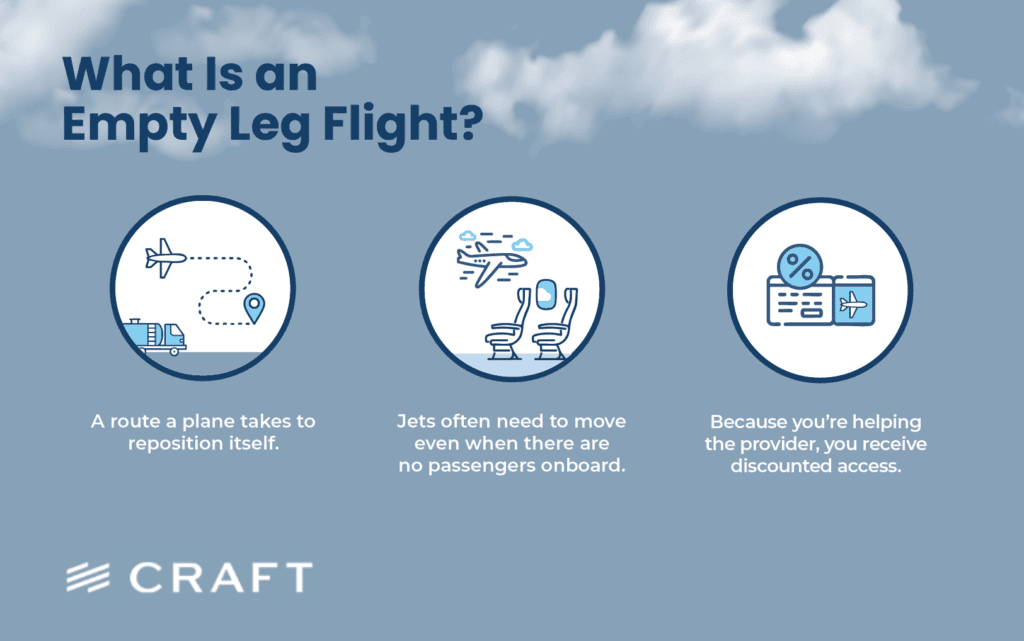
The plane is going from Montana to Arizona regardless, but the aircraft provider knows they can offset some of the cost by selling access to that flight at a reduced rate. It’s not free, of course, but it is less expensive than chartering a flight independently from Montana to Arizona. In practice, you’re accomplishing the same thing, but because you’re helping the provider, you receive discounted access.
How Much Are the Savings?
Savings will vary based on the provider, the plane, and the route. Generally speaking, it’s not uncommon to see discounts between 30% and 70% compared to a traditional chartered flight. It’s a great way to save money, but there are caveats.
The Downsides of Empty Leg Flights
If there’s a downside to this arrangement, it’s that you have little to no control over the schedule of the flight or the conditions. In fact, this is kind of the point. The airline or jet provider needs the plane to move at a specific time and to a specific location. Your access is dependent on their conditions, not your own. In this way, empty leg travel is considerably less flexible than other methods of private aviation, including traditional chartering.
What Is a Jet Card?
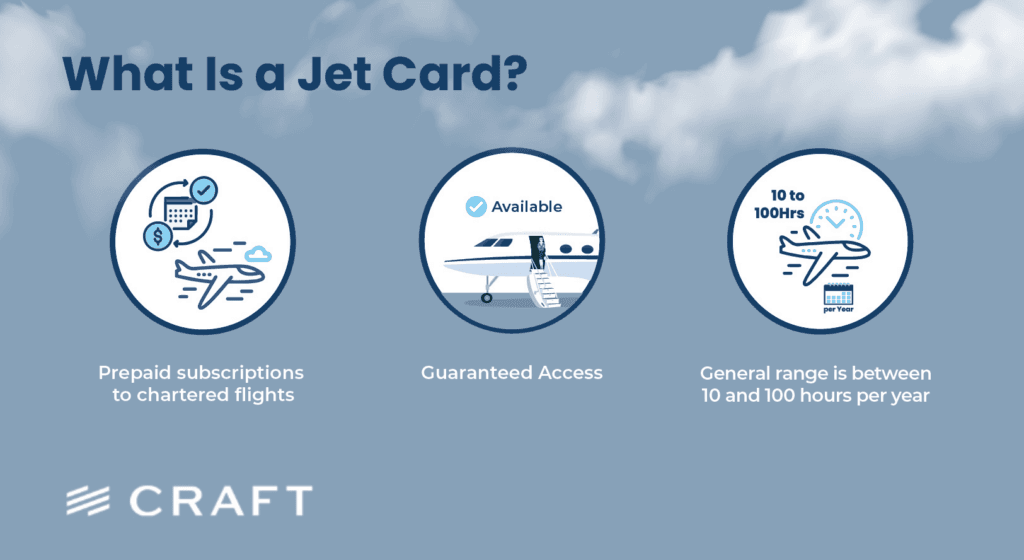
Jet Cards are essentially prepaid subscriptions to chartered flights. You don’t own the plane, but you do have guaranteed access. Jet Cards are typically purchased based on time spent in the air, though options vary by provider. A general range is between 10 and 100 hours per year.
This is a great option for people who want to secure a flight with sometimes as little as a few hours’ notice. In these situations, you have nearly guaranteed access. There may be limitations during peak seasons, but without the headaches and expense of private ownership, you have no equity in the plane and no responsibility for it. At the same time, you can secure travel nearly anywhere with minimal preparation required.
Limitations of Jet Cards
Jet Cards do have downsides. For one, they are more expensive than empty-leg flights, naturally. They also offer less access than fractional ownership programs, where you literally own a portion of the plane.
That said, Jet Cards are a good middle-ground option for people who fly between 30 and 50 hours per year and want a high level of comfort and convenience during their travels.
Which Option Should You Choose?
It’s not that one option is objectively better than the other. If you can find an empty leg flight that suits your needs, there’s certainly no reason not to take advantage of it. It’s affordable and essentially just as comfortable and convenient as any private travel arrangement.
The issue is that availability is unpredictable. Empty leg flights are often inconsistent, and there is rarely significant advanced notice. They are typically available only on a first-come, first-served basis, which means you need to plan ahead and book quickly to ensure the flight isn’t taken by someone else.
By contrast, jet card providers typically guarantee access even with limited availability. For example, NetJets has a fleet of over 800 planes. Except during extremely high-volume travel periods like Christmas or Thanksgiving, rapid access is nearly always assured.
If you like to fly privately but don’t require immediate booking options, empty leg flights are a great way to enjoy high levels of comfort at a relatively affordable price. On the other hand, if you’re traveling for business or simply don’t want to deal with the inconsistencies of empty leg flying, a jet card is likely the better choice.
There’s More Than Two Choices
The good news is that you’re not limited in options. Empty leg flights and jet cards are good choices, but they’re not your only ones. Fractional ownership programs are another way to guarantee access and enjoy carefree luxury travel without some of the inconveniences we’ve described so far.
While traditional fractional ownership programs do have shortcomings relative to jet cards in certain contexts, Craft provides an attractive alternative for people who want high levels of control over their travels without the risk of depreciation that comes with owning a piece of an actual plane.

The arrangement with Craft is a little different. In this case, you’re buying into not a specific plane but rather an investment pod that includes ownership of a plane. At Craft, your risk of depreciation is offset by a diversity of assets. It’s even possible for the value of your interest in the pod to increase through market performance and through monetization of the plane via chartering arrangements.
Add to this the fact that you’re insulated from certain risks and even have the potential to gain relief from capital gains tax, and it becomes a clearly beneficial arrangement for people who want access and consistency for 50 hours or more of air travel per year.
If you’re interested in learning more about how Craft can benefit you, contact us today for a free consultation.
FAQ
What is a private jet card and how does it work?
A private jet card is a prepaid program that gives you guaranteed access to private jets without ownership responsibilities. Jet card members purchase flight hours or blocks of time, often with fixed hourly rates, allowing immediate access to a fleet of aircraft including light jets, midsize jets, and super midsize jets. Some programs also include additional services like catering, international flights, and multiple aircraft options.
How do jet cards compare to fractional ownership?
Jet cards offer convenience and flexibility with no long-term commitment, while fractional ownership gives you a partial stake in a specific aircraft. Jet card programs are often more cost-effective for those who fly 30–50 flight hours per year, whereas fractional ownership is ideal for guaranteed availability and high-demand periods. Both options allow private travel, but fractional ownership may include additional fees, federal excise tax, and maintenance responsibilities.
What should I know about pricing and hidden fees?
Private jet card pricing is generally based on flight hours with fixed rates for different aircraft types, but some programs add peak day surcharges, ferry fees, fuel, or monthly membership fees. Jet card membership terms set the rules for blackout dates, minimum lead time, and additional costs. Always check if pricing includes taxi time, catering, or other hidden fees to avoid surprises.
Can I fly internationally with a jet card?
Yes, many private jet card programs allow international flights, though specific operators may have restrictions. Access to aircraft like super midsize jets or Bombardier Challenger models can make long-haul travel more comfortable, and some programs provide guaranteed availability for certain flight hours around the world. Be aware that fuel, airport fees, and federal excise tax may vary depending on the destination.
How quickly can I access a jet with a private jet card?
Jet cards provide immediate access to a fleet of aircraft, often within hours depending on availability and aircraft size. Programs like Jet Linx, Magellan Jets, and Sentient Jet offer guaranteed access and the ability to fly specific aircraft types, even during high-demand periods. Lead time and blackout dates may apply, but overall jet card members benefit from convenience and reduced planning stress compared to chartering or fractional ownership.
Are there limitations on aircraft types and flight time?
Yes, jet card programs often specify the types of aircraft available, from light jets to super midsize or whole aircraft for longer trips. Flight hours purchased are tied to the aircraft size, hourly rate, and flight time, so it’s important to review terms set by the operator. Certain programs may limit availability on popular routes or peak days, so planning ahead can help maximize convenience and cost efficiency.
How do I know which program is right for me?
Choosing a private jet card program depends on how often you fly, your desired aircraft size, and your tolerance for long-term commitment versus flexibility. If you fly frequently and want guaranteed availability, fractional ownership or high-tier jet cards may make sense. For occasional private travel, cost-effective jet card programs allow you to save time, enjoy private jet travel convenience, and avoid the complexities of ownership.
Related
Related guides
- Flexjet vs Craft: Fractional Shares vs a Fixed-Rate Card
- Jet Card vs. Charter: Which Private Aviation Model Is Right for You?
- Jet Card versus Charter: The Best Choice for Occasional Versus Frequent Flyers
- VistaJet vs Craft: Global Access and Hourly Rates
- Jet Card Prices 2026: Published Rates From 19 Companies, and the True Cost per Hour
Routes and cities
Read next
Charter
Empty Leg Flights: What They Are, What They Cost and How to Book One
Empty leg flights explained: why private jets fly empty, how empty legs are priced and booked, the risks, and how they compare with charter and a jet card.
October 5, 2026 · 6 min read
Statistics
Empty Leg Flight Statistics: Availability, Savings & Booking Trends
Empty leg flights have long been a fairly invisible instrument of private travel. Really, they represent logistical necessity.
October 5, 2026 · 6 min read
Best Jet Cards of 2026: Jet Card Prices and Programs Compared
Jet card prices from 19 companies by cabin size, and NetJets, Flexjet, VistaJet, Sentient Jet, Wheels Up and CRAFT compared on callout, peak days and fees.
September 29, 2026 · 10 min read


Charter Sales
Tell us the trip. We'll tell you the number.
Route, dates, rough timing, how many people. That is enough to start, and you get a firm price for that specific trip rather than a range.
Text us and you'll get a reply within 60 seconds, any hour.